make preferable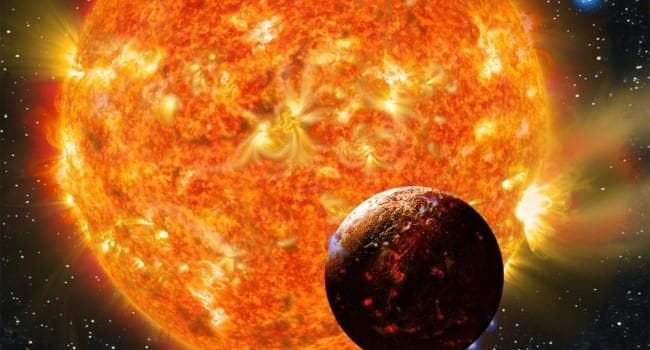
Mercury, the closest planet to the Sun, is a world of extremes. Despite being one of the least explored planets in the solar system, it holds many surprises for astronomers and space enthusiasts alike. With its blistering days, freezing nights, and peculiar orbit, Mercury is unlike any other planet.
NEWS.am Tech presents 10 intriguing facts about Mercury that make it one of the most fascinating celestial bodies in our solar system.
1. Mercury Is the Smallest Planet in the Solar System
Since Pluto was reclassified as a dwarf planet in 2006, Mercury now holds the title of the smallest planet in the solar system. With a diameter of just 4,880 kilometers (3,032 miles), it’s only slightly larger than Earth’s Moon. In fact, Mercury is so small that some of Jupiter’s moons, like Ganymede, are even bigger!
2. A Year on Mercury Is Shorter Than Its Day
Mercury has an incredibly fast orbit around the Sun, completing one full revolution in just 88 Earth days. However, its slow rotation on its axis means that one full day-night cycle (a solar day) on Mercury takes about 176 Earth days—which is longer than its entire year! This means that if you stood on Mercury, you’d experience just one sunrise every two Mercurian years.
3. Mercury Has the Most Extreme Temperature Swings
Being so close to the Sun, you might think Mercury is the hottest planet, but that title actually belongs to Venus. Mercury, however, has the most extreme temperature variations in the solar system. Daytime temperatures soar up to 430°C (800°F), while nighttime temperatures plummet to -180°C (-290°F). The reason for this drastic difference is that Mercury has almost no atmosphere to trap heat.
4. It Has an Enormous Iron Core
Mercury is surprisingly dense for its size, suggesting that it has an exceptionally large iron core, which makes up about 85% of the planet’s radius. Scientists believe that at some point in its early history, Mercury may have collided with a large object, stripping away much of its outer layers, leaving behind a dense metallic core.
5. Mercury Has Ice at Its Poles
Despite being the closest planet to the Sun, Mercury has frozen water in craters at its poles. These deep craters, located in permanent shadow, never receive direct sunlight, allowing ice to remain frozen despite the extreme heat just outside these regions. Scientists believe this ice could have been delivered by comets or formed from water molecules trapped in Mercury’s surface.
6. Mercury’s Orbit Is Highly Eccentric
Mercury has the most elliptical orbit of any planet in the solar system. Its distance from the Sun varies greatly, ranging from 46 million kilometers (29 million miles) at its closest point (perihelion) to 70 million kilometers (43 million miles) at its farthest point (aphelion). This means that from Mercury, the Sun appears up to three times larger in the sky compared to how we see it from Earth!
7. Mercury Has a Weak but Mysterious Magnetic Field
Unlike Venus and Mars, Mercury has a global magnetic field, though it is much weaker than Earth’s. Scientists believe that Mercury’s partially liquid core generates this field. What’s puzzling is that its magnetic field is not centered on the planet but shifted northward, which is something researchers are still trying to understand.
8. Mercury’s Surface Is Covered in Craters
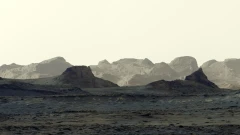
Because Mercury has almost no atmosphere to protect it from meteoroids, its surface is heavily cratered, resembling our Moon. One of its most famous craters is Caloris Basin, a massive impact crater about 1,550 kilometers (960 miles) wide. This crater was created by a huge asteroid impact billions of years ago, and the energy from the collision sent shockwaves rippling across the planet.
9. Mercury’s “Double Sunrises”
Due to its unusual orbit and rotation, if you stood in certain areas on Mercury, you would see a bizarre phenomenon: the Sun would appear to rise, stop, move backward, and then continue rising again before setting. This happens because Mercury’s rotation and orbital speed interact in such a way that the Sun’s apparent motion in the sky changes.
10. Only Two Spacecraft Have Visited Mercury
Despite being one of our closest planetary neighbors, Mercury remains one of the least explored planets. Only two spacecraft have ever visited:
- Mariner 10 (1974-75), which was the first mission to fly by Mercury and mapped about 45% of its surface.
- MESSENGER (2011-2015), which orbited Mercury and provided a wealth of data, including discovering water ice at its poles and analyzing its thin atmosphere.
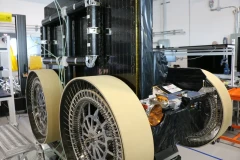
A new mission, BepiColombo, launched by the European Space Agency (ESA) and the Japan Aerospace Exploration Agency (JAXA), is currently on its way to Mercury and is expected to arrive in 2025. Scientists hope it will uncover even more mysteries about this enigmatic world.