make preferable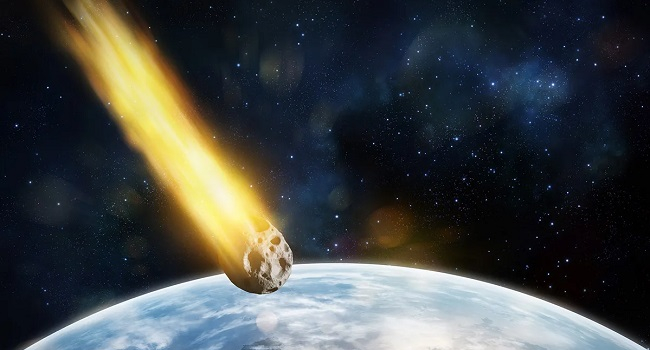
Astronomers are closely monitoring asteroid 2024 YR4, which has a potential collision course with Earth on December 22, 2032. According to NASA estimates, the probability of impact is 1.6%, making it a high-priority object for observation. However, scientists note that further observations may refine the forecast and rule out the threat.
What Do We Know About the Asteroid?
The asteroid was first discovered on December 27, 2024, at the El Sauce Observatory in Chile. Preliminary calculations estimate its diameter to be between 40 and 90 meters, roughly the size of a football field. By the end of 2024, NASA had already added it to the list of objects requiring continuous monitoring.
Bruce Betts, chief scientist at The Planetary Society, reassures the public that they are continuing to collect data, and most likely, in the coming months, the probability of collision will drop to zero.
A similar situation occurred in 2004 with asteroid Apophis, which was initially considered potentially hazardous. However, subsequent calculations ruled out any risk of it impacting Earth.
What Could the Consequences Be?
If 2024 YR4 were to hit Earth, the impact's severity would depend on the location. Potential impact zones include the Pacific and Atlantic Oceans, South America, Africa, and South Asia.
This asteroid falls into the so-called "city killer" category. If it enters the atmosphere, its explosion could be 500 times more powerful than the atomic bomb dropped on Hiroshima. While it likely wouldn’t create a crater, the destruction could be catastrophic. For example, during the Tunguska event in 1908, the blast wave flattened trees over an area of 2,000 square kilometers.
If the asteroid were to explode over the ocean, it could trigger a tsunami, especially if the detonation occurs near the coastline.
Can the Collision Be Prevented?
Scientists are confident that if a threat is confirmed, humanity will have enough time to take action. In 2022, NASA successfully conducted the DART mission, altering an asteroid's trajectory using a space probe. A similar method could be applied to 2024 YR4.
Other potential deflection strategies include:
- Laser ablation, which involves vaporizing the asteroid’s surface to change its trajectory.
- A gravity tractor, a spacecraft that gradually shifts the asteroid’s path using its gravitational pull.
- Evacuation of people from the potential impact zone as a last resort.
NASA representative Kelly Fast assures the public that we have the necessary technologies to prevent a catastrophe."
The Bottom Line…
Although asteroid 2024 YR4 remains an object of heightened interest, the probability of it colliding with Earth is extremely low. In the coming months, scientists will continue refining its trajectory, and it is likely that the threat will be ruled out. Even if the risk persists, humanity has proven technologies to neutralize it.