make preferable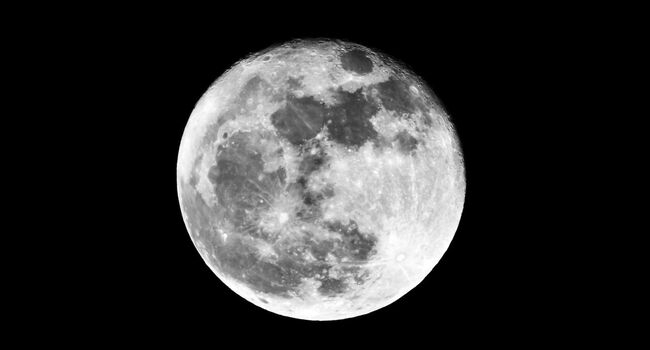
Researchers from the Smithsonian Institution and the University of Maryland have discovered unexpectedly young tectonic structures on the Moon. The discovery, published in the Planetary Science Journal (PSJ), challenges the idea that the Moon has long since lost its geological activity.
What did the scientists find?
By analyzing the far side of the Moon, experts have identified 266 small ridges. Their age does not exceed 200 million years, which is much younger than previously thought.
The researchers used a crater counting method - the fewer craters on the surface, the younger the geological feature.
“We see that tectonic activity on the Moon has been ongoing for the last billion years and may still be ongoing,” said Jacqueline Clark, one of the authors of the work.
Why is this important?
Is the Moon continuing to shrink?
Scientists suggest that the new ridges are associated with a gradual decrease in the size of the Moon due to the cooling of its interior. Their formation could also have been affected by changes in the lunar orbit.
The Moon may be seismically active
Astronomers have previously recorded moonquakes, but now there is more evidence that they are caused not only by meteorite impacts, but also by internal geological processes.
How will this affect future missions?
Selecting safe landing sites
If the Moon is indeed seismically active, future missions such as NASA's Artemis program and Chinese lunar bases should take the possible risks into account.
Using ground penetrating radar
Scientists propose equipping spacecraft with geophysical equipment to study the subsurface structures of the Moon. This will help predict possible earthquakes and choose the best areas for building lunar infrastructure.
The Moon remains an active object
The new discovery proves that the Moon is not just a "dead" satellite of the Earth, but a dynamic system in which geological processes are still taking place. This opens up new opportunities for science and future space exploration.