make preferable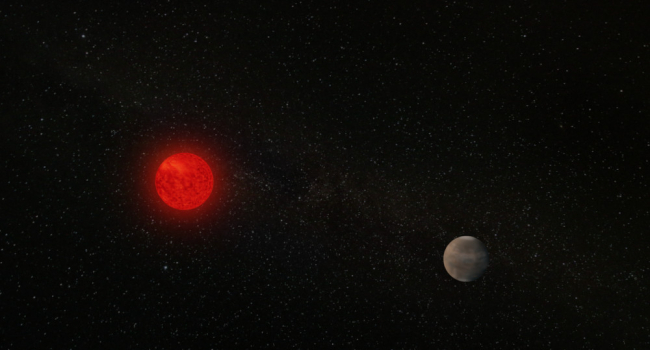
An international team of scientists has discovered two exoplanets orbiting the star HD 101581, located just 41.7 light years away. These planets are similar in size to Earth, but have significantly different masses. The results of the study were published on the arXiv platform for scientific materials.
What is known about the new exoplanets?
The planet HD 101581 b has a radius of about 95% of the radius of Earth, but its mass is 3.6 times greater. The second exoplanet, HD 101581 c, is almost identical to Earth in size (99% of the Earth's radius), but its mass reaches 4.2 times the mass of our planet.
Despite their similar sizes, both planets are unsuitable for life. Due to their proximity to their star, the temperature on their surfaces varies from 473°C to 560°C. Such extreme conditions preclude the existence of liquid water and make these worlds unfavorable for known life forms.
Possible discovery of a third planet
Scientists have also detected a signal that may indicate the presence of a third planet in the HD 101581 system. According to preliminary data, its radius will be about 98% of the Earth's, and its mass will be equal to about 3.6 Earth masses. However, further observations are needed to confirm this discovery.
The discovery was made possible by NASA's Exoplanet Survey Satellite (TESS), a satellite designed to search for exoplanets. This instrument allows scientists to explore nearby star systems and identify potentially interesting worlds for study.