make preferable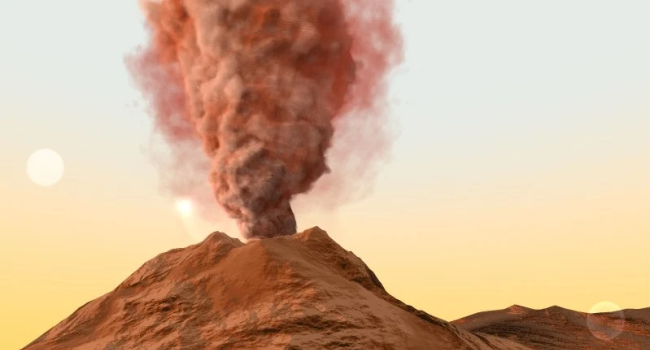
Ancient Martian volcanoes may contain clues to the search for traces of water and alien life. This assumption was made by British researchers from Imperial College London. The findings were published in the Journal of Geophysical Research: Planets (JRGP).
Volcanic ash as a clue
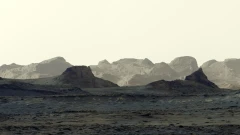
Experts have discovered unusual rocks that are the remains of volcanic ash carried thousands of kilometers from the nearest volcano. This indicates powerful eruptions in the past that threw ash into the planet's atmosphere.
Researchers suggest that layers of dark rocks could have served as a natural shield, preserving mineral-rich rocks underneath. These mineral layers have the potential to preserve signs of ancient water and traces of microbial life.
A new object for study
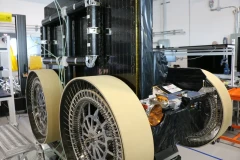
Scientists have identified the Oxia Planum region, which will become an important object of study for the future ExoMars mission. In 2028, the Rosalind Franklin rover will travel to this location to study its mineralogical composition.
Although the rover itself will not be able to move on the uneven dark rocks, scientists are confident that it will be able to study mineral deposits along the edges of volcanic deposits.
If the hypothesis is confirmed, Martian volcanoes could become key points for searching for traces of water and possible microorganisms.