make preferable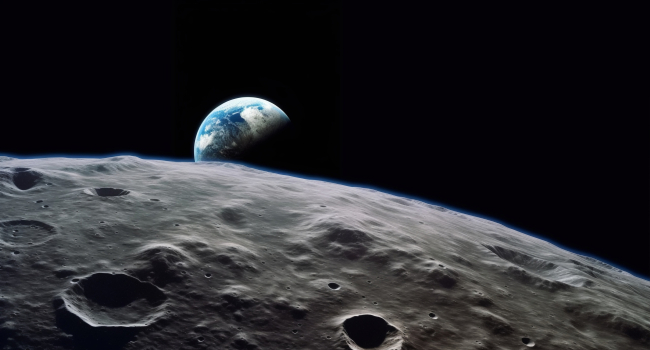
A significant amount of water can be extracted from the lunar soil, according to Chinese scientists from the Ningbo Institute of Materials Science and Engineering. In a study published in the journal The Innovation, they presented a new method for industrial water production on the Earth's satellite.
Earlier, the Apollo and Chang'e-5 missions revealed the presence of water on the Moon, but the moisture content in lunar minerals is very low - from 0.0001% to 0.02%. According to the new study, heating the lunar regolith above 926 °C using concave mirrors can extract 51-76 mg of water from each gram of molten rock.
This means that more than 50 liters of water can be obtained from one ton of lunar regolith. This volume of water is enough to provide drinking water for 50 people for one day.
A particularly important discovery was that lunar ilmenite, one of the five main minerals of the lunar soil, contains the largest amount of hydrogen due to its unique structure with subnanometer tunnels. Experiments have shown that hydrogen contained in lunar minerals can become the main resource for water production on the Moon. The resulting water can be used both for drinking and for irrigating plants. Moreover, it can be decomposed electrochemically into hydrogen and oxygen, which will provide energy and air for future lunar colonies.