make preferable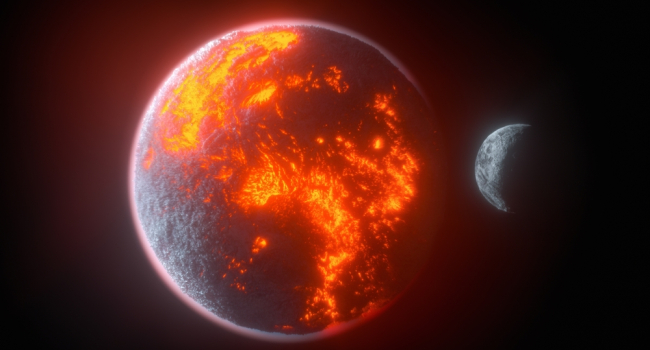
Researchers from the Physical Research Laboratory of India have found out what the Moon was like at its earliest stages. Their work was published in the scientific journal Nature.
The scientists studied lunar soil samples collected by the Pragyan rover, which successfully landed on the lunar surface last year with the Vikram lander. During the experiment, the robot used an alpha-particle X-ray spectrometer 23 times to analyze the composition of the lunar regolith. The data obtained showed that all 23 samples were mainly composed of ferroanorthosite.
Data from other projects confirm that the lunar regolith in different areas, such as the equator and mid-latitudes, consists of similar materials. This indicates that the Moon was covered with a uniform layer of material.
These results support the theory that the entire surface of the Moon was covered with molten magma early in its history. According to this theory, the Moon was formed when the Earth collided with a large object known as Theia, which ejected a huge amount of material into space. This material later coalesced to form the Moon, which explains the similar composition of lunar rocks to Earth. The collision would also have created a huge amount of heat, which would have led to the formation of a layer of molten magma on the surface of the young celestial body.