make preferable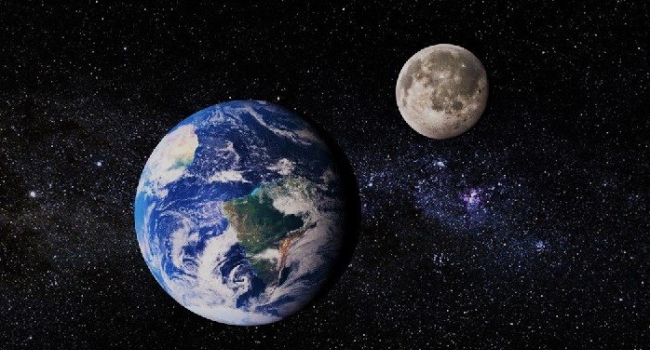
The Earth is already about 4.5 billion years old, and the Moon has been associated with it for almost all of this time. Some astrophysicists suggest that the Moon was formed as a result of a collision between our planet and an object the size of Mars: a huge amount of debris was thrown into space, some of this material came together under the influence of Earth's gravity and formed the Moon.
Could the Moon ever disappear? And what will the consequences be if this happens?
According to Noah Petro, a scientist on NASA's Artemis 3 lunar mission, there are quite a few realistic astronomical events that could cause the Moon to disappear.
“I think the only plausible astronomical event that could separate the Moon from the Earth would be a violent impact that would split the Moon... Similar to the violent impact that is believed to have led to the formation of the Moon, a large enough object could theoretically break the Moon to pieces,” Petro said.
Fortunately, however, the Sun and planets have long since swallowed up most of the large objects in the solar system. According to Petro, a rogue planet entering the solar system from interstellar space could cause damage to the moon, but the likelihood of it colliding with our satellite is extremely low.
But let's assume that the Moon really disappeared, while the Earth remained intact. What will change on it? What problems will arise?
Ocean
According to Space.com, first of all, the disappearance of the Moon will affect the ocean tides, which are responsible for coastal ecosystems. Marine life in intertidal zones will either die or adapt, and we will likely see the collapse of key ecosystems that rely on intertidal zones for food sources.
Nearly three-quarters of the world's population lives within 31 miles (50 kilometers) of the ocean, and billions of people either harvest crops or forage for food from intertidal zones. The collapse of this ecosystem would have catastrophic consequences for coastal communities.
Tides also play an important role in the overall thermoregulation of the ocean, its circulation and the regulation of coastal climate. The sudden disappearance of the tidal forces that drive these mechanisms would have a huge impact on the distribution of heat and energy across the planet, changing temperatures and climates beyond recognition.
Living conditions
Now the Earth rotates around the Sun at a certain angle (23.4 degrees), but over time this angle changes slightly: over 26,000 years, the angle of the Earth's axis relative to its orbit around the Sun will change by about 2.4 degrees. The Moon helps keep these changes under control. If the Moon disappears, this angle could change earlier and faster, causing predictable seasons to disappear and the North and South Poles to sometimes end up at the equator.
All of this could have a very drastic impact on Earth's habitability, as the once predictable environment would become hostile to many forms of life.
Living things
A number of species and ecosystems are highly dependent on the physical effects of the Moon. There is an opinion that life on the planet developed thanks to the Moon and its cycles. The life cycles or behavior of some species of living things are based on the cycles of the moon. For example, some bird species rely on moonlight as a signal for migratory journeys. The timing of moonrise is also key to the synchronized spawning of corals on the Great Barrier Reef.
The moon is also a source of night light for nocturnal species, especially nocturnal predators. Small mammals limit their activity during the high moon (when there is more light) due to the risk of predation. Without this light, prey would have a serious advantage over predators.
Space exploration
The Moon was the first extraterrestrial body on which man set foot, and its disappearance will greatly affect our future steps in space exploration. The Moon today is an important stepping stone for future astronomical journeys, where we can test equipment and learn more about the solar system without straying too far from home.
In addition, the Moon, according to Petro, is a kind of time capsule of the early solar system. By studying it, we can get an idea of how the Sun developed, the history of impacts on the lunar surface, and what it was like in the early stages of the solar system.
If we lost the Moon, we would lose one of the best resources for understanding the origins of the Earth.