make preferable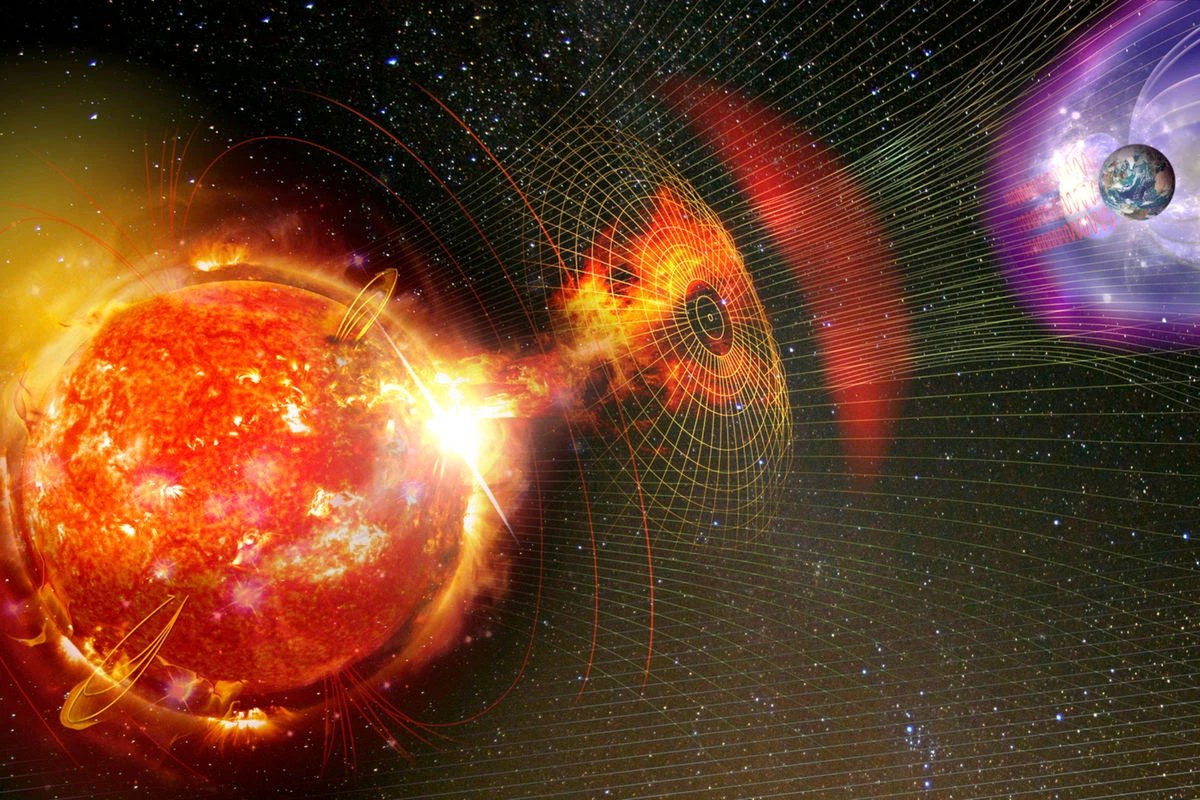
A second magnetic storm of this autumn is likely to occur on Earth on September 24. This forecast was given by scientists from the Laboratory of Solar Astronomy at the Space Research Institute of the Russian Academy of Sciences. The cause is expected to be the impact of a large coronal hole on the Sun.
Earth will be brushed by the edge of a coronal hole
According to the scientists, the coronal hole is a fairly large region stretching from the Sun’s south pole toward the equator. Its equatorial edge, in particular, is expected to be oriented toward Earth and cause a geomagnetic disturbance.
Coronal holes are areas of the solar atmosphere with open magnetic field lines. From them, an accelerated stream of solar wind escapes into space. When such a stream reaches Earth, it can disturb the magnetosphere and trigger magnetic storms.
The first storm of September came after a plasma ejection
The previous magnetic storm began on September 8. A few days before that, the Sun ejected a cloud of plasma in Earth’s direction. It reached the planet during the day on September 7, after which geomagnetic disturbances continued for several days.
The new storm, according to the forecast by the Space Research Institute of the Russian Academy of Sciences, will instead be linked to a different solar process — a stream of matter from a coronal hole.
At the same time, scientists note an overall decline in solar activity. Earlier, the institute’s laboratory reported that over the past two years it has decreased by nearly threefold. Historically, some of the highest levels of solar activity were observed in the mid-20th century, while the lowest levels occurred in 1800–1825.
Thus, individual magnetic storms can occur even against the backdrop of an overall decline in solar activity: local changes in the solar atmosphere and in solar wind streams are sufficient to cause them.