make preferable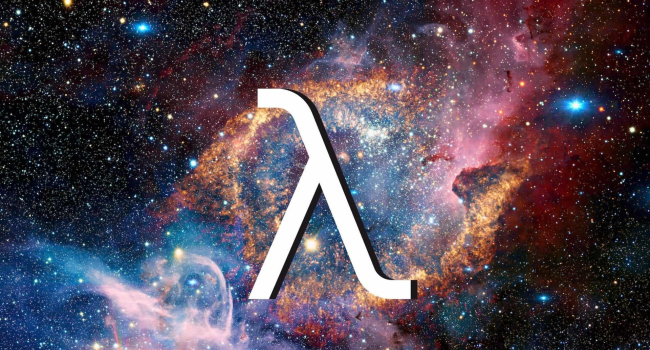
The cosmological constant, which Albert Einstein once called his greatest mistake, returned to science decades later. Today, it underpins the standard model of the Universe and is known as dark energy.
Why Einstein needed "lambda"
In 1917, shortly after developing general relativity, Einstein attempted to apply his equations to the Universe as a whole. To his surprise, they described not a static cosmos but a dynamic one: space would have to be either expanding or contracting.
This contradicted the prevailing view of an unchanging Universe. To keep the model static, Einstein introduced a cosmological constant—lambda—into his equations. In essence, it was a repulsive force built into space itself that counterbalanced the attraction of matter.
Abandonment and return
The solution did not last long. Soon after, Edwin Hubble showed that the Universe is expanding, and the work of Alexander Friedmann and other theorists laid the groundwork for the Big Bang theory. Einstein abandoned the constant and later called its introduction his greatest mistake.
However, in 1998, two independent teams of astronomers measuring how gravity should be slowing the expansion of the Universe found the opposite: the Universe is accelerating. The simplest explanation once again turned out to be that very lambda—now under the name dark energy.
This gave rise to the modern cosmological model ΛCDM: the cosmological constant plus cold dark matter.
Why the model matters
ΛCDM relies on just a handful of parameters, yet it describes a vast range of phenomena: the expansion history of the Universe, the cosmic microwave background, the growth of galaxies, and the large‑scale structure of the cosmos. It has become one of the most rigorously tested theories in modern science.
Nevertheless, scientists emphasise that the model is almost certainly incomplete. The nature of dark energy remains one of the greatest unsolved mysteries in cosmology.
In brief
Einstein introduced the cosmological constant to keep the Universe static, later calling it his greatest mistake. After the discovery of accelerated expansion in 1998, that same constant returned as dark energy and became the foundation of the ΛCDM model. Today, it successfully describes a wide range of cosmological observations, but the nature of dark energy itself remains unclear.