make preferable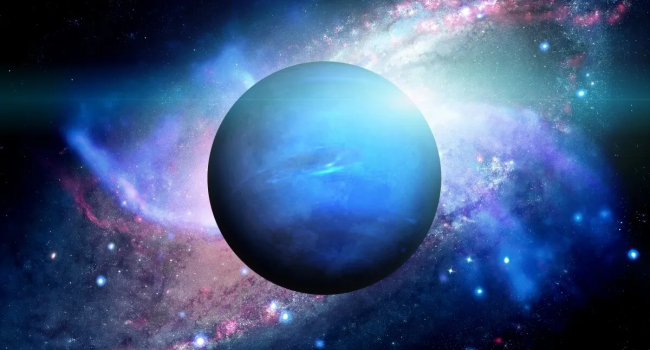
Data from the James Webb Space Telescope have shown that Neptune's inner moons are most likely fragments of much larger icy bodies. Clay minerals have been detected on their surfaces—minerals that form only in the presence of liquid water, even though the moons themselves contain almost no water ice, Space.com reports.
What JWST found
In 1989, Voyager 2 discovered six previously unknown moons of Neptune, five of which are very small and orbit immediately behind the planet's main rings. Studying them from a distance has been extremely challenging. Now, a team from Caltech has used the James Webb Space Telescope to obtain spectra of the rings and three of the inner moons—Larissa, Galatea, and Proteus.
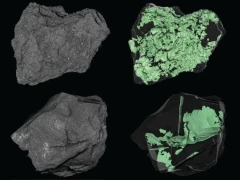
On Larissa, Galatea, and in the rings, magnesium‑rich phyllosilicates—clays that require liquid water to form—were detected. At the same time, water ice on these bodies and in the rings is almost entirely absent. This is unexpected: in the outer Solar System, ice is normally ubiquitous.
"Phyllosilicates have never been found in the outer Solar System beyond Jupiter before, so we were not expecting this at all," noted lead author Riley Davis. "We were stunned to find these clays. They must have come from objects much larger than Neptune's current small inner moons."
A catastrophe in the Neptunian system
The scientists link the discovery to the capture of Triton—Neptune's largest moon. Triton is thought to have formed elsewhere in the Solar System and been captured by the planet's gravity. This process would most likely have completely destroyed Neptune's original moon system, which is thought to have resembled the one currently seen around Uranus.
"If Neptune once had a moon system similar to Uranus's, the capture of Triton would have entirely disrupted it," Davis explained. "This is new and important evidence that a catastrophe occurred in Neptune's system, destroying its original moons, and we are seeing the imprints of that event."
The debris later partially re‑accumulated into the current small inner moons. Estimates suggest that only about one per cent of the original material remains in the system.
Where the material came from
The clays could only have formed deep inside large, differentiated icy bodies, where there was enough heat to melt water ice. The material now visible on the surfaces of the small moons was once buried in the interiors of much larger objects.
An alternative scenario is the tidal disruption of a Pluto‑sized body from the Kuiper Belt that passed too close to Neptune. In either case, the observed material must have originated from the deep interior of a large icy world.
Proteus, the largest of the small moons studied, showed no phyllosilicates. It may have formed from a different part of the debris disk, or may have later been heated enough to destroy the clays.
Why this is valuable
Neptune's inner moons have become the only place in the Solar System where scientists can directly study material from the deep interiors of large icy bodies. Normally, such material remains forever hidden beneath the surface. The catastrophe appears to have turned the ancient moons inside out.
The study was published in the journal Science Advances.
In brief
The James Webb Space Telescope has detected clay minerals on Neptune's inner moons and in its rings—minerals that form only in the presence of liquid water. Yet water ice is almost entirely absent. Scientists believe these moons are fragments of a disrupted original system, destroyed when Triton was captured. The material was once buried deep inside much larger icy bodies. The work was published in the journal Science Advances.