make preferable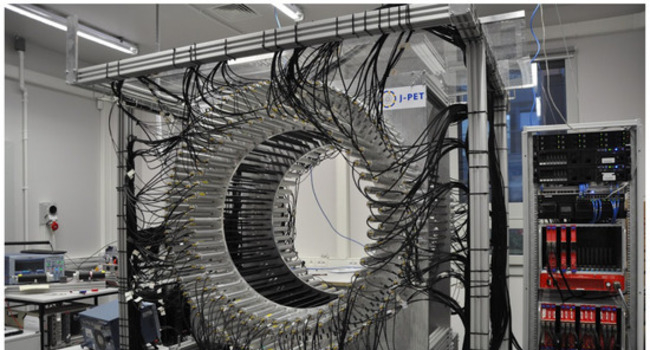
New calculations appear to have put an end to a 25-year-old mystery in particle physics. But at the same time, they revealed contradictions in the results of other experiments.
For 25 years, physicists tried to explain a slight discrepancy between how the muon was calculated to behave in a magnetic field and what experiments showed. The difference was about one part per million and could point to the existence of unknown particles.
In 2021, the situation changed dramatically. New theoretical calculations showed that the muon's behavior matches experimental data with much greater precision. However, this brought a new question: why do these calculations not match earlier predictions that were also based on experimental data?
The mystery of the muon's "wobble"
The muon is a heavier cousin of the electron. In a magnetic field, it acts like a tiny magnet: its spin causes the particle to undergo a characteristic precession.
The magnitude of this motion is defined by the g-factor. If the muon existed in complete isolation, its value would equal exactly 2. But quantum theory suggests that other particles constantly influence the muon. They briefly pop in and out of existence, slightly altering its motion.
Therefore, precisely measuring the muon's g–2 essentially offers a window into the quantum realm. As physicist Alex Keshavarzi from University College London explains, measuring g–2 can be viewed as a way to learn how many particles exist in the universe.
In 2001, an experiment at Brookhaven National Laboratory showed that the muon deviated from expected values more than theory predicted. This sparked immense interest: the discrepancy could be evidence of unknown particles, potentially including those linked to dark matter.
To verify the result, the 50-foot-wide magnetic ring was moved from Brookhaven to Illinois, to Fermi National Accelerator Laboratory. There, the experiment was upgraded to take new, more precise measurements.
Two ways to calculate muon behavior
The main difficulty lay in the theoretical calculation. Electromagnetic and weak interactions are described relatively well, but the strong interaction binding quarks inside protons and neutrons is far more complex.
One approach came to be known as the data-driven method. Instead of computing the strong interaction's effect entirely, physicists use results from electron-positron collisions that produce particles containing quarks.
This specific method yielded a prediction that differed noticeably from the 2021 Fermilab experiment results. The tension was large enough to nearly reach the threshold required to claim the discovery of new particles.
However, another approach existed: lattice quantum chromodynamics (lattice QCD). In this case, quark interactions are modeled on a massive mathematical grid, similar to how meteorologists divide the atmosphere into grid cells to forecast the weather.
In 2014, the international BMW collaboration began using this method to calculate the muon's g–2. Initially, the precision of these calculations was much lower than that of the data-driven method. Over the following decade, however, scientists refined their computational methods, and growing computing power enabled a significant leap in precision.
In 2021, BMW published results showing that the muon's behavior fully aligns with the Fermilab experiment. Other independent groups subsequently obtained similar results.
Today, many physicists consider the muon puzzle largely solved: its extra "wobble" can be explained by known particles and established physical laws.
Yet this does not mean all questions have vanished.
A new conflict — inside the experiments
Now, physicists are trying to understand why the data-driven method produces a different result.
Particular attention has focused on the VEPP-2000 collider in Novosibirsk, where electrons are collided with positrons. These collisions allow researchers to study the production of pions — particles linked to the strong interaction.
In 2010, a new detector was installed at the collider. When its results were published in 2023, researchers discovered that the pion production rate differed significantly from earlier measurements.
According to physicist Fyodor Ignatov from the University of Liverpool, the result came as a surprise to researchers.
Scientists carefully rechecked the new data but have found no errors so far. Furthermore, some modern lattice QCD calculations agree specifically with the new VEPP-2000 result.
At the same time, analysis of older data from another collider — BABAR in California — aligns well with the old value.
Thus, physicists face a new mystery. Differences between experiments could stem from previously unnoticed measurement systematics. But a more fundamental cause cannot be ruled out — such as the influence of unknown particles or interactions.
Ultimately, the 25-year-old muon mystery, which seemed to be solved, led physicists to another problem. Now they must determine which experiments correctly describe quark and pion behavior.
The answer to this question will determine whether the Standard Model of particle physics fully explains observed phenomena — or if something new is still hiding beyond known physics.
Based on materials from Quanta Magazine