make preferable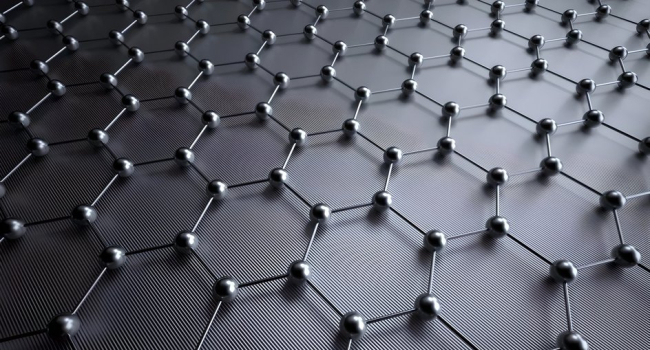
What material can be called the strongest on Earth? At first glance, the answer seems obvious: diamond. But if you put graphene, steel, or perhaps certain other lesser-studied materials side by side, it turns out there is no single winner.
The reason is that scientists do not measure "strength" with one universal metric. A material can resist tension exceptionally well, yet shatter upon impact. Another can withstand immense loads, yet scratch easily. That is why the real battle of the strongest materials takes place across several parameters at once: hardness, tensile strength, stiffness, and fracture toughness.
And this is where the most interesting differences begin.
Graphene: an incredibly strong material that is almost weightless
Graphene is a layer of carbon atoms just one atom thick. They are arranged in a characteristic hexagonal lattice, giving the material an extraordinarily high tensile strength of around 130 gigapascals.
In practice, this means an astonishing combination: graphene is extremely strong while being practically weightless. Its main advantage is not just its absolute strength, but its exceptionally high strength-to-weight ratio.
This is why graphene is seen as a promising foundation for new composites. It can be added to polymers, metals, and fibers to make them stronger without significantly increasing their weight. Such properties are particularly appealing for aerospace, electronics, transport, and sports equipment.
However, there is a problem preventing graphene from replacing traditional structural materials for now. Producing large, defect-free sheets of graphene is difficult and expensive. Furthermore, a material that performs brilliantly under laboratory conditions will not necessarily behave as well in a giant bridge or a car body.
Steel loses to graphene — yet remains irreplaceable
If you look solely at certain strength indicators, steel indeed loses to graphene. However, building cities shows why a single record is not enough.
Steel can deform under load, absorb impact energy, and withstand damage without failing instantly. For a bridge, a building, or a car, this is often far more important than the extreme strength of an isolated atomic structure.
In addition, steel is relatively cheap, well-understood, produced in colossal volumes, and recyclable. Engineers can formulate alloys with the precise combination of strength, ductility, corrosion resistance, and fatigue resistance required.
Thus, steel is a good example of why a material with less impressive laboratory specs can end up being far more useful in the real world.
Diamond: the champion of hardness, yet still not a "super-material"
Diamond genuinely remains the benchmark for hardness. Its crystal structure is so resistant to scratching and wear that the material is used wherever conventional tools quickly wear out.
Hence its use in cutting and drilling tools, abrasives, and processing equipment for hard materials.
Yet hardness and strength are not the same thing. Diamond can resist surface wear, but its crystal structure contains cleavage planes along which cracks can propagate under specific forces. Therefore, an extremely hard material is not necessarily the most impact-resistant.
It is precisely this distinction that triggered the quest for new "super-materials."
An unproven "diamond killer"
One of the most intriguing candidates for the strength title is wurtzite boron nitride (w-BN). It is a synthetic material with a crystal structure that can be formed under extreme pressures and temperatures.
Theoretical calculations made it famous: some studies suggested that wurtzite boron nitride could possess mechanical properties surpassing those of diamond. As a result, it is frequently included in lists of potentially the hardest materials in the world.
However, it is important to separate theory from experiment.
When researchers managed to synthesize pure polycrystalline wurtzite boron nitride and directly measure its properties, its average hardness was around 46 gigapascals — lower than that of diamond. Nevertheless, the material demonstrated exceptionally high thermal stability and remains promising for material processing, electronics, and other high-tech applications.
Thus, wurtzite boron nitride is not a proven "diamond killer," but rather an example of how far modern technology is trying to push beyond natural materials.
A cosmic competitor?
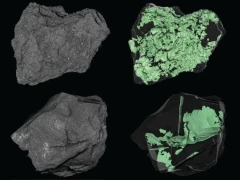
An even more unusual story surrounds lonsdaleite, a hexagonal form of carbon traditionally referred to as hexagonal diamond.
It has been discovered in meteorites and linked to the extreme pressures generated during cosmic impacts. In particular, lonsdaleite was found in meteorites associated with impact processes.
Why are scientists so interested in it? Unlike ordinary diamond, where the carbon atomic layers follow a cubic arrangement, lonsdaleite should feature a hexagonal structure. Theoretical calculations indicated that this configuration could make the material even harder and stiffer than regular diamond. Some models predicted a noticeable superiority over it.
However, there is a major issue with lonsdaleite. In 2014, researchers demonstrated that samples previously thought to be a distinct lonsdaleite phase might actually be ordinary cubic diamond containing a high density of defects, such as stacking faults and twins. Consequently, the existence of lonsdaleite as an independent, pure material remained questionable for a long time.
Yet research continues. Shock-compression experiments on graphite have recorded the formation of lonsdaleite at extreme pressures, and in 2026, new reports emerged regarding the synthesis of bulk hexagonal diamond. The story of lonsdaleite is far from over.
Ultimately, there is no universal "strongest" material: graphene wins in tensile strength, diamond in hardness, steel in structural reliability, while wurtzite boron nitride and lonsdaleite remain promising candidates for new records. The future of materials science lies not with a single absolute champion, but in tailoring materials to specific engineering challenges.
Вased on materials from Science Times and Pursuit