make preferable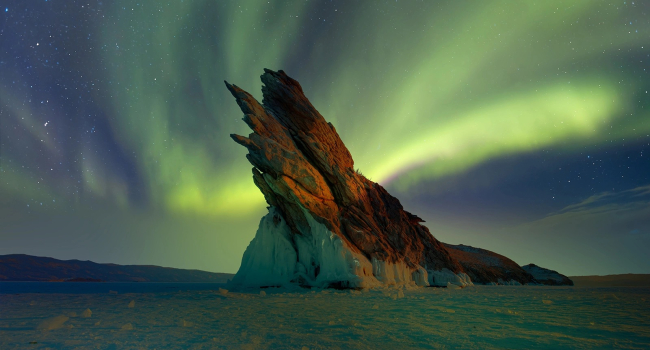
The Northern Lights are one of the most impressive natural phenomena on Earth. The green, red, purple, and pink bands of light that appear in the night sky are actually the result of a complex interaction between the Sun and our planet.
This phenomenon is also known as the aurora: in the Northern Hemisphere as the Northern Lights (aurora borealis), and in the Southern Hemisphere as the Southern Lights (aurora australis). Space weather—processes occurring in the space between the Sun and Earth—is responsible for its appearance.
When high-energy particles emitted by the Sun collide with atoms and molecules in Earth's atmosphere, they emit light that we perceive as a glow in the sky.
How the Northern Lights are born
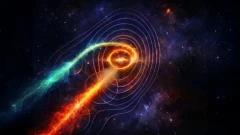
The main source of this phenomenon is the Sun. It constantly emits a stream of charged particles known as the solar wind. Upon reaching Earth, these particles interact with the planet's magnetic field—a protective shield surrounding our planet.
Earth's magnetic field not only protects the surface from most solar radiation, but also directs some of the charged particles toward the polar regions. There, the accumulated energy is released and rushes into the upper layers of the atmosphere.
When solar particles collide with atmospheric gases, the atoms and molecules gain extra energy. After a short time, they return to their original state, releasing this energy as tiny flashes of light. It is billions of these interactions that create the moving bands of light in the aurora.
Why the lights have different colors
The color of the Northern Lights depends on which gas is involved in the reaction, as well as the altitude at which the particle collisions occur.
The most common shade is green. It is created by oxygen atoms at an altitude of approximately 100 to 200 kilometers above the Earth's surface. Red light appears higher—at altitudes above 200 kilometers, where oxygen is also involved, but under different energy conditions.
Nitrogen is responsible for blue, pink, and purple shades. At an altitude of about 100–200 kilometers, excited nitrogen can emit blue light. If the interaction occurs closer to the Earth's surface—below 100 kilometers—pink and reddish-purple shades appear.
Sometimes different colors mix, creating unusual white, purple, and multicolored auroras.
Based on materials from NASA Science