make preferable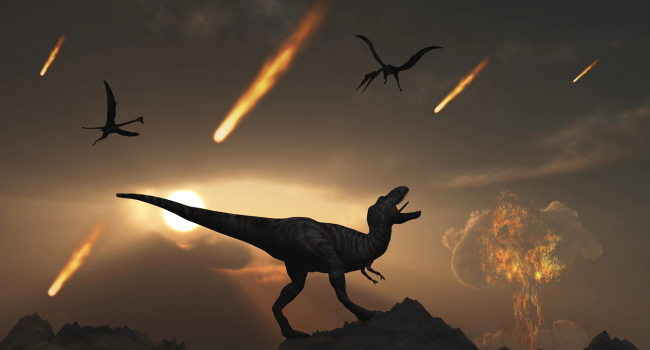
More than 66 million years ago, the impact of a massive asteroid led to one of the greatest catastrophes in Earth's history: about 75% of all species, including the dinosaurs, vanished. However, new research shows that this very impact may have done more than just destroy life—it could have created the conditions for its subsequent emergence. Scientists studying the Chicxulub crater on the Yucatán Peninsula in Mexico have found evidence that, shortly after the catastrophe, an environment favorable for the development of microorganisms formed in the impact zone. Furthermore, the findings support the hypothesis that similar cosmic impacts early in Earth's history could have played a role in the origin of life itself.
The mystery of the Chicxulub crater
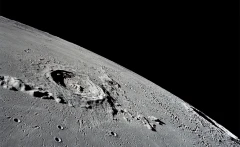
The Chicxulub crater is considered one of the most famous traces of Earth's collision with a space object. It was formed after the impact of an asteroid about 10 to 15 kilometers in diameter, which punched through the atmosphere and slammed into the planet's surface near the modern-day Gulf of Mexico. It is this event that is linked to the mass extinction at the end of the Cretaceous period, which saw the disappearance of dinosaurs and numerous other species. For decades, scientists have tried to understand what happened during the first years following the impact and how the unusual central mountain range inside the crater—the so-called peak ring—was formed. To investigate, an international team of researchers conducted deep drilling in the crater area in 2016 as part of the International Ocean Discovery Program (IODP) expedition. Using the drilling vessel Myrtle, scientists retrieved hundreds of rock samples from depths exceeding 1,300 meters.
Traces of an unexpected recovery of life
Researchers expected to find a picture of total ecological destruction. However, the results proved to be quite the opposite. In the layers above the crater, scientists discovered a large quantity of microfossils—remains of ancient organisms—as well as traces of activity from worms and small crustaceans that appeared shortly after the catastrophe. Analysis of the rocks revealed that an active biological system already existed in the crater area approximately 30,000 years after the impact. "It was the opposite of what we expected. After the impact, the location became a habitat for life, and quite rapidly at that," noted geophysicist Joanna Morgan from Imperial College London. Scientists believe that the unique features of the crater itself played a crucial role. After the collision, hot rocks deep within it remained heated above 300 degrees Celsius for more than 100,000 years. Seawater circulated through them, creating conditions similar to underwater hydrothermal vents. Such hydrothermal systems are currently considered among the most suitable locations for the existence of ancient life forms.
Asteroid impact as an "incubator" for the first organisms
The findings support the so-called impact origin of life hypothesis. According to this theory, asteroid impacts could have not only destroyed living organisms but also created the chemical conditions necessary for the emergence of the first biological structures. According to scientists, during the first few hundred million years of Earth's existence, the planet was under constant asteroid bombardment. These impacts could have created localized "reactors" where a combination of heat, water, and minerals fostered complex chemical processes. "The entire early planet could have been a giant prebiotic reactor," believes astrobiologist Charles Cockell from the University of Edinburgh. In his view, post-impact craters could have functioned as nature's laboratories: varying temperatures and conditions within them allowed different organic molecules to form until, one day, a self-replicating molecule emerged.
Not just destruction, but a new stage of evolution
Scientists emphasize that the hypothesis is not yet definitively proven. Other potential sites for the origin of life, such as hydrothermal vents on the ocean floor, remain plausible. However, the study of Chicxulub has reshaped our understanding of the role asteroids played in Earth's history. "Asteroids give and take at the same time," notes geophysicist Jay Melosh from Purdue University. "Chicxulub destroyed the existing life at the time, but simultaneously created conditions for its recovery and allowed mammals to assume a dominant position on the planet." Thus, the catastrophe that ended the era of the dinosaurs may have been one of the key factors preparing Earth for the rise of new life forms—and perhaps even for the very origin of life itself.