make preferable
For thousands of years, humanity has been asking one of the most fundamental questions: is there life beyond Earth? So far, the only planet we know that harbors life is our own. But modern telescopes and space missions are gradually bringing scientists closer to an answer.
The paradox is that even life itself still lacks a single, universal definition. However, to search for alien organisms, scientists may not necessarily need to know exactly what constitutes life in all its possible forms. It is enough to detect signs that point to biological activity. Put simply, the main goal of astrobiologists today is not to find aliens themselves, but the traces of their existence.
Where to look for extraterrestrial life?
The search is not limited to distant stars. Scientists are also considering objects within our own solar system.
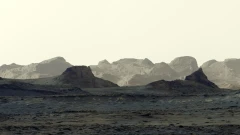
One of the prime candidates remains Mars. Today, the planet appears cold and lifeless, but billions of years ago, its surface featured rivers, lakes, and conditions potentially suitable for microbial life.
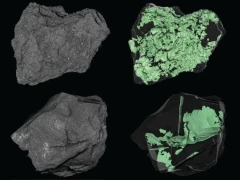
NASA's Perseverance rover is exploring the ancient Jezero Crater, where a lake once existed. In 2024, the rover collected a rock sample named "Sapphire Canyon." Researchers reported that it contains potential biosignatures — signs that could be linked to ancient microbial life. However, scientists emphasize that this is not yet proof of organisms on Mars, but merely a reason for further study.
Another NASA rover, Curiosity, previously discovered large organic molecules in the rocks of Gale Crater. Researchers believe that non-biological processes cannot fully explain the quantity of detected organic compounds, though the origin of these substances remains a subject of scientific debate.
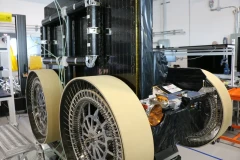
Another promising target is Europa, Jupiter's icy moon. Scientists suspect that a vast ocean of liquid water lies beneath its miles-thick ice crust. In 2030, NASA plans to launch a detailed study of Europa using the Europa Clipper spacecraft, which will analyze the ice composition and potential signs of this world's habitability.
Life as we don't know it
The search for extraterrestrial organisms is complicated by the fact that we primarily rely on Earth as an example. But life in the universe might turn out to be completely different.
On Earth, there are organisms capable of surviving in extreme conditions: in acidic lakes, Antarctic ice deserts, and the depths of the ocean near red-hot hydrothermal vents.
Such creatures are called extremophiles. They show scientists just how diverse the conditions for life can be. If organisms can survive in places once thought to be completely uninhabitable, perhaps other planets host forms of life that seem impossible to us today.
To date, scientists have confirmed the existence of more than 5,800 exoplanets in our galaxy. But this is just a fraction of the possible total: the number of planets orbiting other stars could reach into the trillions.
To determine which ones are most promising for the search for life, scientists use the concept of the "habitable zone."
This is the region around a star where temperatures might allow liquid water to exist on a planet's surface. However, such a zone alone does not guarantee the presence of life.
The planet must have an appropriate size, a stable atmosphere, and its star must not frequently release powerful radiation flares that could destroy a potential biosphere.
Thus, the habitable zone is merely the first filter used to select the most intriguing targets for further research.
K2-18 b: one of the most mysterious worlds
One of the most fascinating targets for scientists is the exoplanet K2-18 b, located about 124 light-years from Earth.
It is a super-Earth — a planet nearly nine times more massive than ours. It orbits a red dwarf star and sits in a zone where liquid water could theoretically exist.
In 2019, the Hubble Space Telescope detected water vapor in its atmosphere — a first for a potentially habitable planet of this type.
Later, the James Webb Space Telescope detected carbon-bearing molecules in the atmosphere of K2-18 b, including methane and carbon dioxide. Even more intriguing was the possible detection of dimethyl sulfide — a compound primarily produced on Earth by marine phytoplankton.
However, scientists stress that this is not yet proof of life. Further data is needed to rule out other possible explanations for the origin of these substances.
Material prepared based on NASA Science publications.