make preferable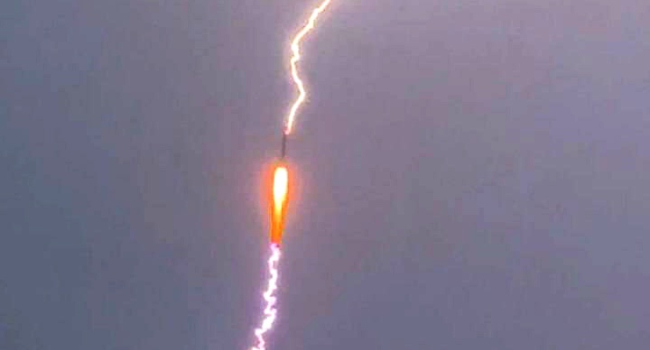
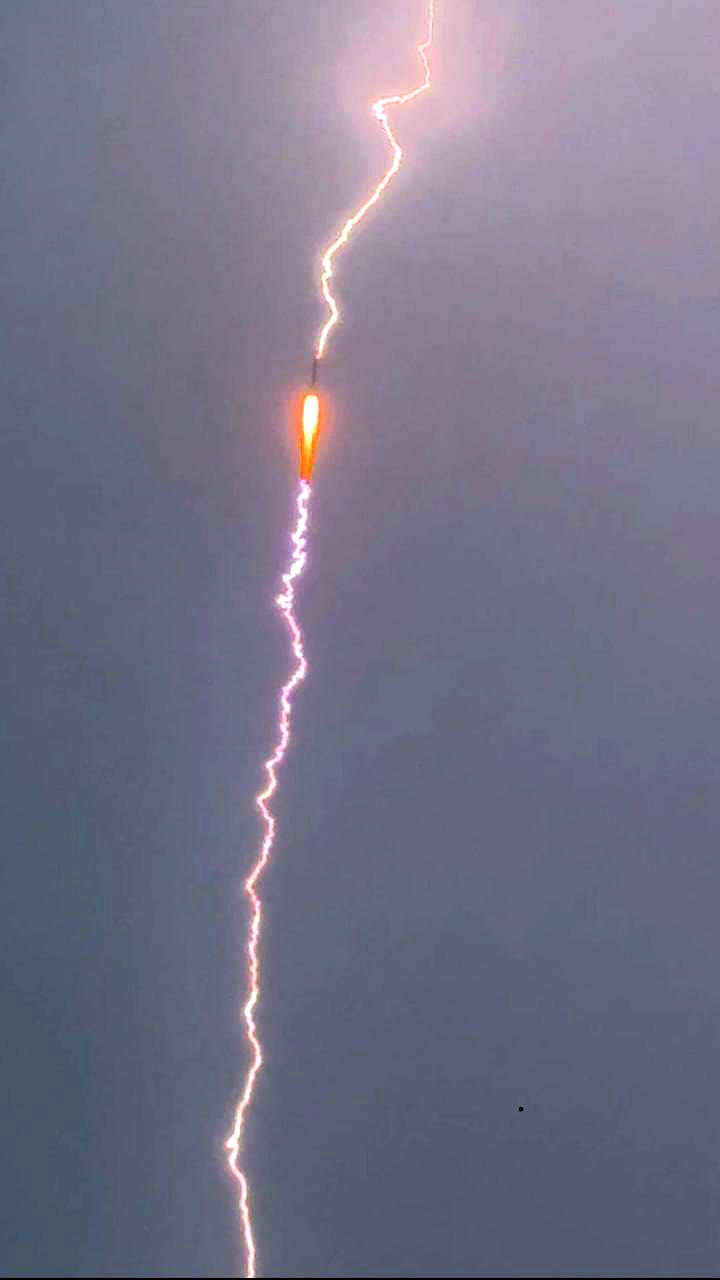
On July 23, during a launch from the Xichang spaceport, lightning struck a Long March 3B carrier rocket. Despite the incident, the mission was completed successfully.
What happened
The launch took place at 3:00 PM Moscow time, 4:00 PM Yerevan time. The rocket was delivering the sixth satellite of the Tianlian-2 series to a geostationary transfer orbit.
At the 35th second of flight, when the vehicle was at an altitude of several kilometers, it was struck by lightning. The discharge hit the payload fairing, passed through the rocket body, and exited through the plumes of the operating engines.
Consequences
According to preliminary data, the spacecraft's equipment was not damaged. Rockets of this class are equipped with special lightning protection. The flight continued according to the standard program, and the satellite was successfully placed into its target orbit.
A similar case in Russia
A similar incident occurred on May 27, 2019, at the Plesetsk cosmodrome. Lightning struck the payload fairing of a Soyuz-2.1b rocket at the 14th second of flight. The discharge passed through the body, but the Glonass-M satellite was successfully delivered to orbit.
In brief
On July 23, lightning struck a Chinese Long March 3B rocket at the 35th second of flight. The discharge passed through the payload fairing and the rocket body but did not damage the payload. The Tianlian-2 satellite was successfully placed into orbit. A similar incident occurred in 2019 with a Russian Soyuz-2.1b rocket. Modern rockets are equipped with lightning protection, allowing flight to continue even after a strike.