make preferable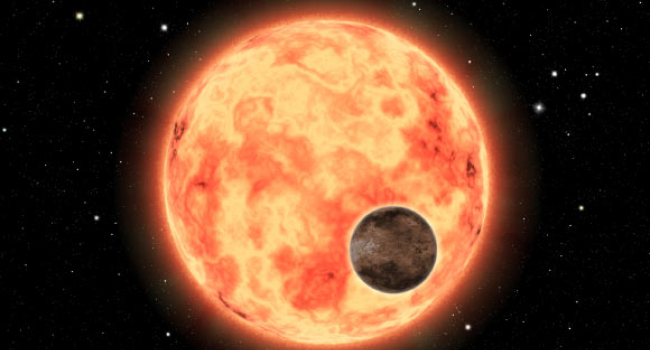
For a long time, we judged the cosmos by our own "front porch." In our solar system, everything is neat and logical: small rocky planets close to the Sun, gas giants farther out. But when astronomers learned to peer into deep space and discovered the first 5,600 exoplanets, it turned out the universe has a rather peculiar sense of humor. Out there, beyond our cozy home, the laws of physics forge worlds from starlight and dust that put any Hollywood sci-fi to shame.
Lava hell and Sci-fi brought to life
Take 55 Cancri e, for instance. This planet wasn’t nicknamed "hell" by accident: it is eight times more massive than Earth, yet you wouldn't want to live there even in a next-generation protective spacesuit. The planet sits so close to its star that its surface has transformed into a seamless, churning magma ocean. What’s more, the atmosphere is so superheated that vaporized rock condenses in the sky and rains down back onto the ground as liquid lava.
Fans of Star Wars remember the sandy world of Tatooine with its famous double sunset. In reality, such a world exists, and its name is Kepler-16b. It is the first discovered planet that legitimately orbits two stars at once. However, instead of a desert inhabited by Sand People, you are greeted by an ethereal gas giant akin to Saturn — standing on a solid surface to watch the sunset is simply impossible, though the view from space is breathtaking.
Planets like LHS 3154b, on the other hand, shouldn't have been found by astronomers at all. According to all known laws of physics, it simply shouldn't exist. Imagine a tiny, barely glowing dwarf star with a massive Neptune-sized heavyweight orbiting it. This star shouldn't have had enough building material in its disk to mold such a giant in the first place. The discovery of LHS 3154b literally forced scientists to throw out old planetary formation textbooks and start drafting new theories.
Cosmic cotton candy and glass clouds
If you think giant planets are strictly heavy, take a look at HAT-P-67 b. In size and radius, it is twice as large as Jupiter — a true monster. Yet it weighs only a third of Jupiter's mass. This planet has puffed up to such a degree that its density is comparable to cotton candy.
Its puffy neighbor, WASP-107b, went even further. Peering into its atmosphere, telescopes detected clouds made not of water or ammonia, but of tiny silicate sand grains. It only looks pretty in artist illustrations: inside this "fluffy" structure, hurricane winds howl, whipping the silicates into literal scalding sandstorms.
The eyeball planet and the smell of rot
Located 50 light-years away from us, LHS 1140 b is a world that perpetually faces its star with only one side. Because of this, the entire planet is encased in a permanent ice shell, except for one single spot. Right in the center of the illuminated hemisphere, the star melts the ice, creating a perfectly round ocean of liquid water. From a distance, the planet looks like a giant, eerie eyeball staring into the darkness of space. Remarkably, this un-frozen "pupil" holds an excellent chance for harboring life.
If we could "smell" space, HD 189733 b would be the absolute last place you'd want to visit. The James Webb Space Telescope analyzed its atmospheric composition and discovered it is drenched in hydrogen sulfide. Visually, the planet appears as a gorgeous azure-blue marble, but in reality, howling storm winds sweep clouds around at thousands of kilometers per hour, and the air smells like rotten eggs and decaying meat.
Ghosts and dramas of rocky sisters
Sometimes science delivers detective plots. For a long time, it was believed that the star 40 Eridani A hosted its own super-Earth — HD 26965 b. Sci-fi fans rejoiced: according to Star Trek lore, this was the homeworld of Mr. Spock — Vulcan. However, fresh observations in 2024 disappointed fans. It appears Vulcan doesn't exist: the subtle wobbles interpreted as the planet's gravitational pull turned out to be ordinary, powerful stellar flares. Vulcan dissolved into thin air.
On the other hand, two rocky sisters of Earth are very real, demonstrating how different the fates of similar planets can be. Gliese 12 b got lucky: it orbits its red sun at a safe distance, maintains a comfortable temperature, and likely retained a thick atmosphere with liquid water.
SPECULOOS-3 b, however, drew the short straw. Orbiting far too close to its star, it completes a full orbit in just 17 hours. Radiation scorched away any potential for life long ago, turning one side into an eternally searing skillet and the other into a dead, frozen wasteland.
The universe has proven to be far more inventive than our wildest fantasies. As modern telescopes peer deeper into the dark, it becomes increasingly clear: out there, worlds are waiting for us that we simply don't have the words to describe yet.