make preferable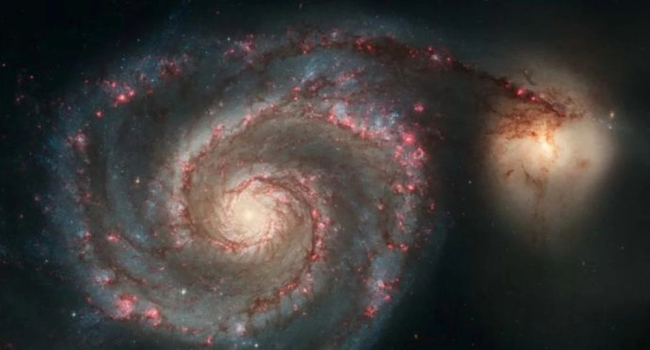
Theorists have proposed a new explanation for why the Universe, despite the second law of thermodynamics, is becoming increasingly structured. The key role in this process is played by the expansion of space itself.
What the paradox is
The second law of thermodynamics states that in a closed system, entropy (a measure of disorder) always increases. The Universe as a whole should tend toward maximum chaos and uniformity. Yet we observe the opposite: from an almost uniform cloud of matter after the Big Bang, galaxies, stars, planets, and life emerged. This apparent contradiction has long troubled physicists.
The new explanation
The authors of the work, published in the journal Physical Review D, showed that the expansion of the Universe itself creates "new space" — additional volume in which matter can organize into complex structures without violating the overall growth of entropy.
Gravity gathers matter into clumps, reducing local entropy, but at the same time increases it in the rest of space in the form of radiation and heat. The expansion of the cosmos acts as a kind of "buffer" that allows this process to continue.
Significance of the discovery
The new model does not contradict Einstein's general theory of relativity but builds upon it. Scientists believe that this approach could help in the creation of a unified quantum theory of gravity — one of the main unsolved problems in modern physics.
In brief
Theoretical physicists have explained the paradox of the Universe's structuring: the expansion of space allows local entropy to decrease (creating stars, galaxies, and life) while compensating with an overall increase in disorder. Gravity plays the role of an organizing force. This solution does not contradict general relativity and could assist in the development of quantum gravity theory. The work was published in the journal Physical Review D.