make preferable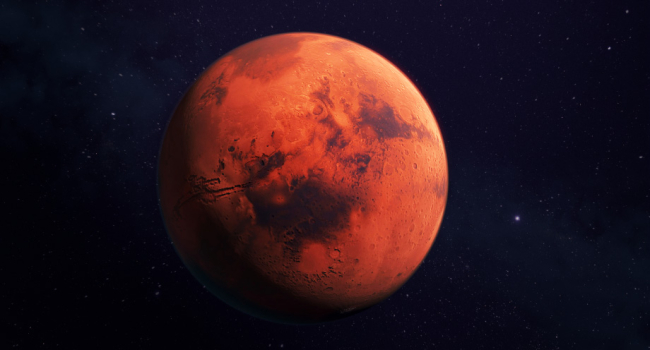
Astrobiologists from the University of California, Riverside, conducted modeling that showed: for the long-term preservation of an atmosphere, a rocky planet must be at least the size of Mars. This significantly narrows the list of candidates for hosting life.
What the model accounted for
Researchers led by Michelle Hill created the "Smaller Than Earth Habitability Model." They simulated the atmospheric fate of rocky worlds of various sizes located in the habitable zone around Sun-like stars.
The model took into account two main processes:
- Loss of gas due to stellar wind and radiation
- Atmospheric replenishment through volcanic activity
The conclusion: for an atmosphere to be preserved for billions of years (long enough for life to emerge), a planet must have a diameter of at least 80% of Earth's. Planets the size of Mars (about 53% of Earth) are on the borderline — under favorable conditions they may still retain an atmosphere, but smaller worlds lose gas too quickly.
Why size matters so much
Small planets have:
- Weak gravity
- Weaker magnetic fields
- A mantle that cools faster, which halts volcanic activity
As a result, volcanoes cannot replenish gas losses quickly enough.
Important nuances
Higher carbon content in the mantle significantly increases the chances of retaining an atmosphere — carbon dioxide is heavy and less prone to escaping. Planets with a thicker mantle layer and a larger reserve of radioactive elements also retain their atmospheres better.
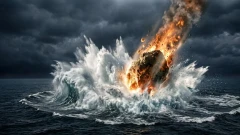
Even if a planet initially lost its atmosphere, it may get a second chance: comets and asteroids can deliver new volatile substances (hydrogen, oxygen, carbon).
What this means for the search for life
The model helps astrobiologists prioritize targets for observation. From the thousands of exoplanets in habitable zones, it is now easier to select the most promising ones.
In brief
Scientists from the University of California, Riverside, have found that for the long-term preservation of an atmosphere, a rocky planet must be at least the size of Mars (at minimum 60–80% of Earth's diameter). Smaller worlds lose gas too quickly due to weak gravity and insufficient volcanic activity. This is an important criterion in the search for potentially habitable exoplanets. The work was published in The Planetary Science Journal.