make preferable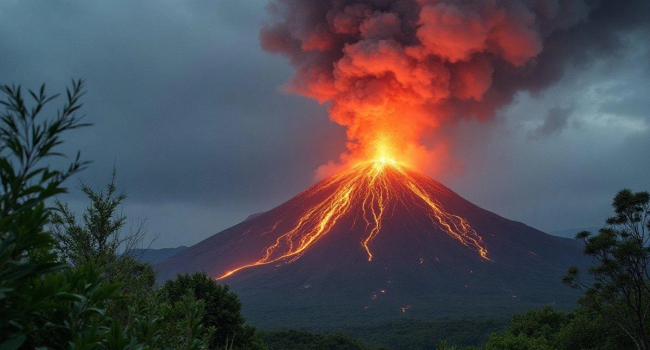
An international group of researchers has discovered that ancient volcanic eruptions could have contributed to global cooling not only through ash in the atmosphere but also through a complex chain of processes in the ocean. The work was published in the journal Communications Earth & Environment (CEE).
How the "volcanic cooling system" worked
Scientists studied traces of powerful eruptions in the Andes during the Late Miocene (11.6–5.3 million years ago). Volcanic ash, rich in iron, phosphorus, and silicon, entered the waters of the Southern Ocean and acted as a natural fertilizer for diatoms.
After the ash fell, the population of these microscopic organisms grew sharply. During their growth, they actively absorbed carbon dioxide from the atmosphere. After dying, the algae, along with the accumulated carbon, sank to the ocean floor, removing it from the atmospheric cycle for a long time. This mechanism is known as the "biological pump."
Computer modeling showed that within the first two years after a major eruption, diatom growth increased more than twofold. With regular eruptions, the ocean gradually enhanced CO₂ absorption, creating a long-term cooling effect.
Additional consequences
During the same period, marine ecosystems changed noticeably. For example, the average size of baleen whales increased from about 5 to 12 meters. This could have further enhanced the cycling of nutrients in the ocean.
Important caveats
The authors emphasize that volcanic ash was only one factor in global cooling, alongside changes in ocean currents, winds, and glacier growth. The results cannot be directly applied to the modern situation, since the current rise in carbon dioxide concentration is occurring significantly faster than in ancient times.
In brief
Scientists have found that volcanic ash entering the Southern Ocean stimulated mass reproduction of diatoms. This enhanced the "biological pump," which removed carbon dioxide from the atmosphere, contributing to climate cooling. The mechanism was particularly active during the Late Miocene. The study was published in the journal Communications Earth & Environment.