make preferable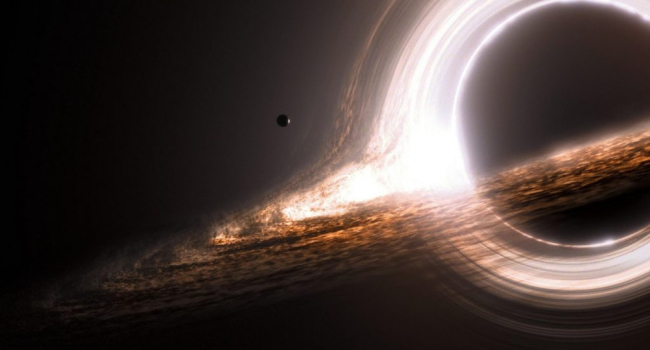
Scientists have proposed a more universal description of how black holes "lose" energy and information. The new model simplifies understanding of the processes that occur with these objects throughout their entire "lives" — from birth to evaporation.
What was wrong with the old theory
In the 1970s, Stephen Hawking proposed his famous theory according to which black holes slowly evaporate by emitting so-called Hawking radiation. However, this theory worked well only for black holes in equilibrium — that is, practically unchanging over time.
Study lead Abhay Ashtekar from Pennsylvania State University noted that Hawking's laws of black hole mechanics had been a paradigm for 50 years, but they had a serious limitation.
The new solution
The scientists proposed replacing the concept of the event horizon with a so-called dynamical horizon. This allowed the first and second laws of thermodynamics to be applied to black holes even in dynamic situations — during formation, merging, and evaporation.
Now, the properties of black holes can be described through the increase of entropy (a measure of disorder), much like how we describe boiling water. This provides a more accurate picture of how energy and information behave inside and around these objects.
Why this matters
The new model allows for a better understanding of the processes occurring with black holes during their birth, merging, and final evaporation. It also paves the way for more precise calculations in quantum gravity.
Ashtekar emphasized that this allows the extension of the first and second laws of thermodynamics to black holes that are not in equilibrium, overcoming the limitations of the paradigm that had been used for more than half a century.
The study was published in the journal Physical Review Letters.
In brief
Scientists have proposed an update to Stephen Hawking's famous theory of "leaking" black holes. The new model uses the concept of a dynamical horizon and allows the laws of thermodynamics to be applied to black holes in dynamic situations — during formation, merging, and evaporation. This simplifies the description of processes and opens up new possibilities for studying quantum gravity. The work was published in the journal Physical Review Letters.