make preferable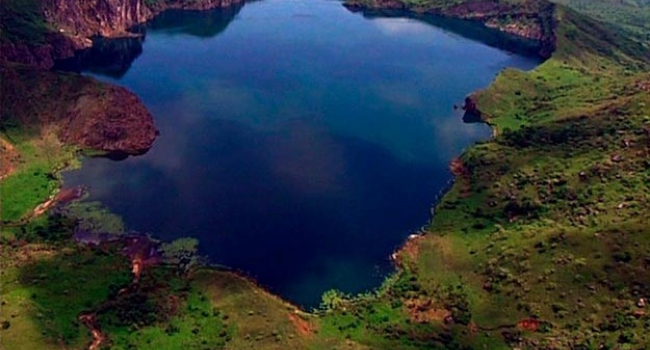
In the history of natural disasters, there are events that defy conventional logic. Here, there was no roar of an erupting volcano, no devastating tsunami, or glowing streams of lava. Everything happened in absolute, ominous silence. On August 21, 1986, in a mountainous region of Cameroon, all life within a 25-kilometer radius vanished without a trace in a matter of hours. Lake Nyos, long considered a peaceful, picturesque body of water, carried out a mass execution, destroying 1,746 people and thousands of domestic animals.
This phenomenon entered science under the dry name of a "limnic eruption." But for those who were there that night, it looked like a planned, ruthless genocide carried out by nature itself.
The exposition: a peaceful evening in the savanna
By the evening of August 21, the inhabitants of the villages of Nyos, Subum, Cha, and Fang had finished their usual chores. Local farmers herded their livestock, had dinner, and went to bed. The weather was muggy, and fog was gathering over the high-altitude lake located in the crater of an extinct volcano.
Lake Nyos seemed completely safe to the locals. It was over 200 meters deep, and its water was clear. None of the survivors could later recall anything suspicious, except for a strange, muffled rumble coming from the water around half past nine in the evening. People assumed it was an ordinary landslide in the mountains and went back to sleep. For most, this sleep was their last.
The climax: an invisible scythe
What happened at the bottom of the lake is what physicists would later call the champagne bottle effect. For centuries, carbon dioxide had been seeping through the volcanic floor of Nyos. A massive volume of water acted as a giant cork, holding the gas at the very bottom under colossal pressure.
The water at the bottom was literally oversaturated with it. That night, the stability of the system was disrupted — the trigger could have been a small underwater landslide, an earthquake, or even a sudden cold downpour that cooled the upper layers of water. The gas-saturated bottom water rushed upward. The lake literally boiled. A giant water column over 100 meters high erupted from it, generating a tsunami that washed away the vegetation on the shores. But the primary killer was not the water. About one billion cubic meters of carbon dioxide were released into the atmosphere all at once.
The heavy, dense, and completely invisible gas poured from the crater down the slopes like an avalanche, spreading through the valleys where the villages stood. It moved at a speed of about 70 kilometers per hour, instantly displacing oxygen. People died in their beds before they even had time to wake up. Those who were outside dropped dead mid-stride. Fires in hearths went out instantly; birds, cows, sheep, and even insects suffocated. The gas cloud simply swept across the land, leaving absolute emptiness in its wake.
The morning of dead silence
The next morning, the few who were on high ground or by some miracle received a smaller dose of gas woke up from a deep state of unconsciousness. An deafening, unnatural silence reigned all around. No birds sang, no flies buzzed. Rescuers who arrived in the affected area a day later found a post-apocalyptic scene. Thousands of human and animal bodies lay in the village streets. Yet, there was not a single trace of violence, trauma, or struggle on them; people looked as if they had simply been unplugged in the middle of a conversation or work.
The water in Lake Nyos itself had turned from sky-blue to a dirty rust color: the churning torrent had brought up tons of iron-rich sediments from the bottom, which oxidized in the air.