make preferable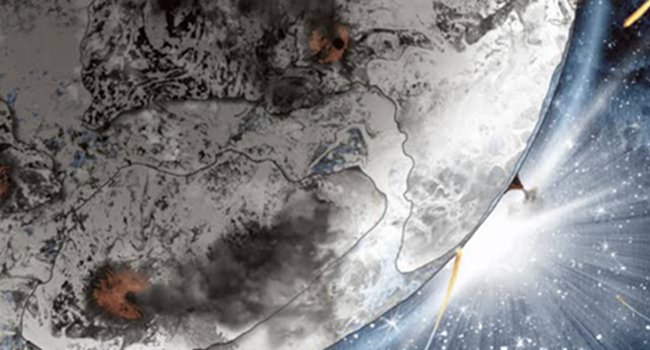
A group of researchers from the University of Colorado Boulder and Blue Marble Space has conducted a simulation of the long-term evolution of Earth's climate. According to their findings, the planet's complex plant biosphere could persist significantly longer than previously thought.
What the calculations showed
The scientists used a three-dimensional climate model that takes into account changes in temperature, cloud cover, precipitation, ocean conditions, and atmospheric circulation. The simulation covered a period of two billion years.
As the Sun ages, its luminosity will gradually increase. This will lead to rising temperatures on Earth and a decrease in atmospheric carbon dioxide concentration — a key component for plant photosynthesis. Ultimately, most vegetation will disappear. The last survivors will most likely be the most drought-resistant species, such as cacti and plants with a special type of photosynthesis.
The researchers considered two main scenarios: gradual CO₂ absorption by rocks and a scenario with relatively stable carbon levels, where the main factor becomes rising temperature.
How much time remains
According to the results, Earth's complex plant biosphere could survive for about another 1.8 billion years. This is significantly longer than some previous studies predicted. After that, the planet will begin to lose its oceans and become uninhabitable for most life forms due to further solar heating.
Important caveats
The authors emphasize that the model did not account for possible plant evolution or human technological development. These factors could significantly alter the timescale of the biosphere's existence. It is not impossible that life could adapt to new conditions, spread into the upper atmosphere, or even leave the planet.
The scientists also consider hypothetical technologies for artificially reducing solar radiation, although their possible consequences have not yet been sufficiently studied.
In brief
Scientists from the University of Colorado Boulder and Blue Marble Space have modeled Earth's future climate and concluded that the planet's complex plant biosphere could survive for about another 1.8 billion years. The main factors will be the gradual heating of the Sun and the decline of atmospheric carbon dioxide. After that, the planet will begin to lose its oceans and become uninhabitable for most life forms. The model did not account for possible plant evolution or human technological progress, which could change the forecast. The work was published in the journal AGU Advances.