make preferable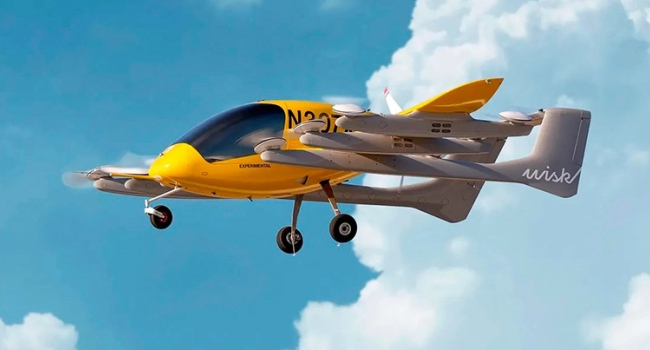
Personal aviation technologies have officially left the realm of science fiction and entered the runway. Advances in battery capacity, composite materials, and digital modeling systems have turned flying cars and personal air taxis into a reality. Today, this market is experiencing a massive boom, with dozens of startups, automotive conglomerates, and aviation giants fighting for dominance in the air. Analysts estimate that by 2040, the urban air mobility industry could reach a capitalization of $1.5 trillion, forever changing how we move, work, and live.
From luxury to public transport
One of the main players in this field is the German company Volocopter. Their aircraft, VoloCity, is positioned as the first commercially licensed electric air taxi. In the initial phases, flights will operate with a pilot on board, and the cabin will accommodate only one passenger. The ticket price for the debut flights will be around €300; however, the company's ultimate goal is to make the service affordable.
"We don't want this to be a toy for the wealthy," Volocopter asserts. Engineers plan to deploy a network of "vertiports" (urban hubs for vertical takeoff) and lower the cost of a trip to the level of a premium conventional taxi fare, integrating the flights into a single urban transport system.
Meanwhile, the Japanese startup SkyDrive, in partnership with Toyota, has successfully tested the SD-03 model — the most compact electric aircraft in the world. The developers are confident that the demand for such vehicles is driven by the dead-end faced by ground traffic. Neither electric cars nor high-speed trains have solved the problem of urban traffic jams, leaving the sky as the only remaining free space.
Not just taxis: jet suits and emergency medical services
While some companies design capsules to transport office workers, others look toward extreme and highly specialized technologies. The British company Gravity Industries has taken the path of creating a personal jet suit (jetpack) with a capacity of 1,050 horsepower.
Currently, this equipment is compared to Formula 1 race cars — it can only be operated by trained professionals and military pilots. However, the creators see a serious practical future for the technology. For instance, in emergency medicine: a rescuer or paramedic in a jet suit could rapidly reach hard-to-access areas in mountains or gorges, bypassing destroyed roads and difficult terrain, to provide first aid even before a heavy helicopter arrives.
Aviation's shift to electric propulsion has already solved the two main problems of old-fashioned helicopters: extreme noise levels and toxic emissions within city limits. Aerial mobility is gradually ceasing to be just a concept at exhibitions. The question is no longer whether we will fly to work over the rooftops of houses, but how quickly regulators will approve the routes for these smart machines.