make preferable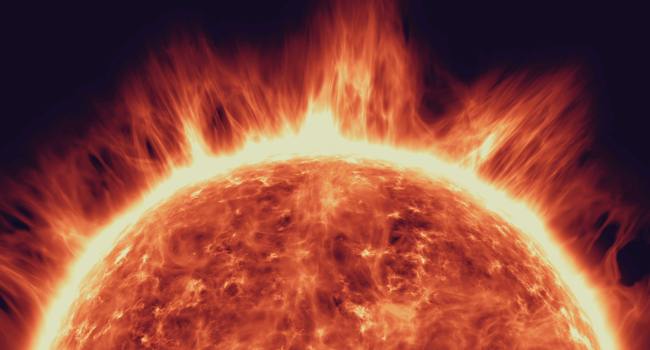
The temperature of the Sun's outer atmosphere (the corona) reaches millions of degrees, while the surface of the star is heated to only 5500 °C. This mystery, known for several decades, has received a new possible explanation: tiny particles of cosmic dust may play a role in heating the corona.
What Parker Solar Probe data showed
NASA's Parker Solar Probe, which has approached closer to the Sun than any previous probe, recorded unexpected voltage spikes on its antennas. Researchers from the University of Alabama in Huntsville, led by Syed Ayyaz, concluded that these spikes were caused by impacts of charged dust particles hitting the probe at high speed.
Previously, it was thought that in the extremely high temperature of the corona, dust could not survive for long and had no noticeable influence. The new data suggest otherwise.
How dust affects the corona
Cosmic dust, becoming charged in the solar wind plasma, interacts with the electromagnetic field and Alfvén waves. According to Ayyaz, dust can affect energy transfer in two ways:
- The mass of the dust grains adds inertia to the plasma, allowing energy to propagate further
- The charge of the dust enhances the interaction between charged particles, waves, and the magnetic field, leading to localized heating
It is precisely this redistribution of energy that could explain the anomalously high temperature of the Sun's outer atmospheric layers.
Syed Ayyaz noted that their work adds a new ingredient to the picture: dust particles.
What's next
The scientists emphasize that future missions to the Sun must account for the influence of dust. This will require special detectors capable of measuring the properties of dust particles near the star.
In brief
Scientists have suggested that cosmic dust may be one of the reasons for the anomalously high temperature of the solar corona. Data from the Parker Solar Probe showed that dust particles, hitting the spacecraft, create charged particles that interact with plasma waves and magnetic fields. This could affect the transfer and release of energy in the Sun's atmosphere. The discovery calls for a revision of solar corona models and the inclusion of dust in future research. The work was published in The Astrophysical Journal.