make preferable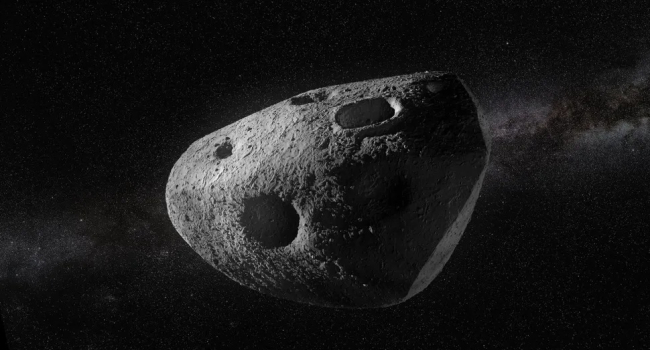
In 2029, Earth's inhabitants will be able to observe a rarest astronomical event — the flyby of asteroid Apophis at a very close distance from our planet. Scientists have already begun compiling detailed visibility maps so that as many people as possible can witness this "flyby of the millennium," reports Space.com.
When and where it will be visible
According to calculations by cartographer Michael Zeiler and astronomer Rick Feinberg, approximately 90% of Earth's population (about 7.6 billion people) will be able to see Apophis with the naked eye on April 13, 2029. Actual visibility will depend on weather and light pollution.
The asteroid will not appear as a bright meteor. It will appear as a slowly moving luminous point. At the moment of closest approach, it will move across the sky at roughly the width of the full Moon per minute.
Visibility will last about seven hours: beginning over Australia and ending over the North Atlantic. The peak of brightness is expected at 23:35 Moscow time over Cameroon — at this moment, about 3.9 billion people in Africa, Asia, eastern South America, and parts of Europe will be able to observe it.
How close it will fly
At its closest approach, Apophis will pass about 31,600 kilometers from Earth's surface — closer than the orbit of geostationary satellites. The event will be visible over a significant portion of South America, the United States, Africa, and Europe.
Professor Richard Binzel from the Massachusetts Institute of Technology emphasized that this is the first time in human history that an asteroid flyby visible to the naked eye can be precisely predicted.
Why it is safe
When discovered in 2004, Apophis was considered potentially hazardous — there was a possibility of collision. However, subsequent observations have completely ruled out the risk of impact both in 2029 and for the next hundred years.
Scientific value
Scientists view the flyby as a unique opportunity to study how Earth's gravity affects the asteroid. It is possible that under its influence, landslides may occur on Apophis's surface or fresh rock may be exposed. This will help better understand the structure of such celestial bodies.
In brief
On April 13, 2029, asteroid Apophis will pass approximately 31,600 km from Earth. Residents of most of the planet will be able to observe this event with the naked eye. The asteroid will appear as a slowly moving bright point. Scientists are already preparing visibility maps and planning observations. There is no collision danger, but the flyby will provide valuable scientific information about the influence of Earth's gravity on asteroids. This will be the first such visible event in human history.