make preferable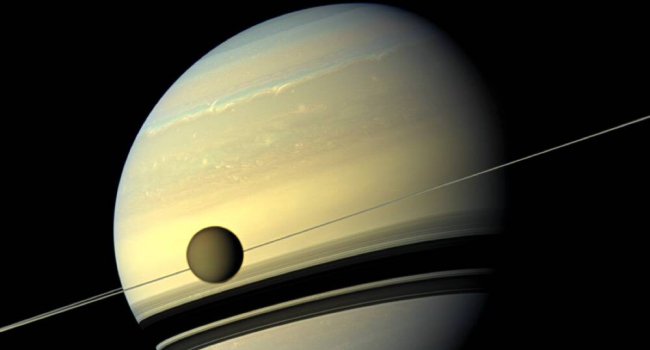
While some experts are preparing crewed missions to Mars, others are already looking further — to Titan. At the first "Humans to Titan Summit" held in June 2026, scientists discussed not only the possibility of sending people to this exotic moon of Saturn but also an increasingly relevant question: is it even necessary?
Titan as the next big goal
Titan attracts scientists with its thick atmosphere, rivers, lakes, and seas of liquid hydrocarbons. Planetary scientist Pascal Lee from the SETI Institute and chairman of the Mars Institute believes that Titan could become "the next big leap after Mars" and even the last major step before interstellar travel.
However, in his opinion, sending humans to Titan is a task for the very distant future.
The android revolution
Lee notes that a rapid revolution in artificial intelligence and humanoid robots is already underway on Earth. Robots are becoming increasingly agile, autonomous, and multifunctional.
The scientist points out that androids can run, jump, and perform acrobatic feats, and with the development of AI, one doesn't need to be a visionary to understand that an artificial human will be realized.
Unlike humans, robots do not need food, air, sleep, or life support systems. They produce no waste and can work 24/7. In essence, they combine all of humanity's advantages while lacking biological limitations.
Robots as ideal explorers
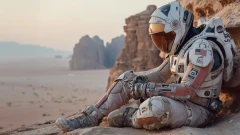
Pascal Lee believes that androids with advanced AI will become the primary explorers of deep space. They will be able to establish infrastructure on Titan, and humans will later arrive at a ready-made base.
As a proving ground for testing human-robot interaction, the scientist proposes using the Haughton-Mars project on Devon Island in the Arctic — an analogue of Martian conditions.
The future of space exploration
In Lee's view, the future of humanity's cosmic expansion will be closely tied to the symbiosis of humans and artificial intelligence. Robots will take on the most dangerous and longest missions, while humans will focus on scientific leadership and final settlement.
Lee concluded that for him, Titan is an even more interesting target than Mars, as the last great leap before interstellar travel.
In brief
Scientists are discussing whether humans will ever be able to land on Titan, Saturn's largest moon. Planetary scientist Pascal Lee believes that due to the rapid development of AI and humanoid robots, androids will most likely be the first explorers of this distant world. Robots will be able to establish infrastructure there, and humans will arrive later. Titan is seen as the next big step after Mars and a possible springboard for interstellar flight. The future of space exploration, according to experts, will be closely tied to the symbiosis of humans and artificial intelligence.