make preferable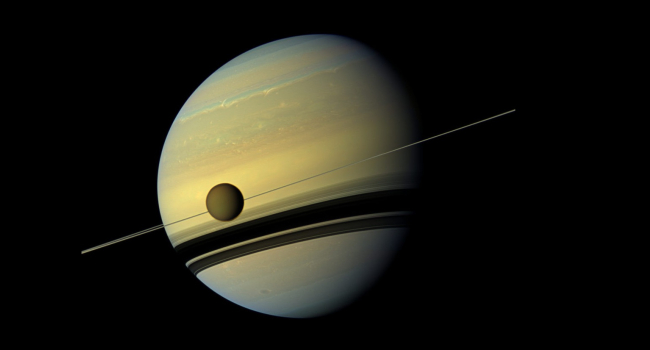
After the Moon and Mars, scientists are increasingly seriously considering the next step in human space exploration. This time, the focus is on Titan — Saturn's largest moon. On June 11–12, 2026, the first "Humans to Titan Summit 2026" was held in the US, dedicated to the concept of a crewed mission to this exotic moon, reports Space.com.
Why Titan
According to Amanda Hendrix, Director of the Planetary Science Institute and President of the Explore Titan group, the idea of sending people to Titan has ceased to seem like pure science fiction.
She noted that everyone understands this is a matter of the distant future, but normalizing the very idea — that Titan is actually a fairly reasonable place for humans — is very important.
Titan attracts scientists primarily because of its dense atmosphere, composed mainly of nitrogen. It provides natural protection from harmful radiation. Additionally, the moon has rivers, lakes, dunes, and complex organic chemistry based not on water but on hydrocarbons. This makes Titan a unique laboratory for studying prebiotic processes.
Main challenges
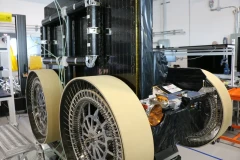
Summit participants discussed a wide range of aspects: from spacesuit and vehicle design to concepts for habitat modules, airlocks, and possible weather phenomena (including hydrocarbon monsoons and floods).
One of the main problems is the duration of the flight. Scientists are looking for ways either to shorten travel time or to minimize the negative effects of prolonged weightlessness and radiation on the crew.
At the same time, Titan is seen not only as a final destination but also as a potential hub for further exploration of the Saturn system, particularly Enceladus. The moon's abundant reserves of methane, nitrogen, and oxygen could be used to produce fuel on site.
Technology already allows thinking about the future
Planetary scientist Scott Rafkin from the Southwest Research Institute (SwRI) emphasized that human exploration of Titan is not a question of physics — it is a question of time, technology, and commitment to the goal.
He noted that many of the key challenges are already understood, and every new development in propulsion, energy, robotics, and life support systems brings humanity closer to this goal.
Summit participants agreed that a mission to Titan would require decades of preparation, but it is precisely such ambitious projects that drive the development of technologies that will later be useful throughout the Solar System.
Next steps
The next important milestone will be the launch of NASA's Dragonfly mission (no earlier than 2028) — a nuclear-powered rotorcraft that will explore Titan's surface. A second "Humans to Titan" summit is planned to be held around that time.
In brief
Scientists have begun seriously discussing the possibility of a crewed mission to Titan, Saturn's largest moon. The first "Humans to Titan Summit 2026" showed that Titan is considered a promising target due to its dense atmosphere, abundant resources, and scientific value. The main challenges are the duration of the flight and creating suitable infrastructure. According to experts, this is not a question of physics but a matter of time, technology, and long-term commitment. The next summit is planned to coincide with the launch of the Dragonfly mission in 2028.