make preferable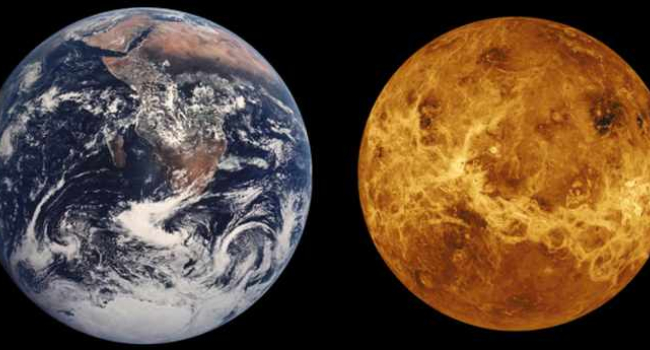
Scientists from the Johns Hopkins University Applied Physics Laboratory and Sandia National Laboratories have put forward an interesting hypothesis: our planet may have unintentionally sent microorganisms to Venus. If future missions detect life in Venus's clouds, it would most likely be of "Earthly" origin.
The concept of panspermia between Earth and Venus
The researchers applied the idea of panspermia — the hypothesis that life spreads through space on fragments of celestial bodies — to the Earth–Venus pair. They developed a "Venus Life Equation" (analogous to the famous Drake equation) and modeled how much Earth material could have been delivered to the neighboring planet as a result of asteroid impacts.
During powerful collisions with Earth, enormous amounts of rock and possibly microorganisms are ejected into space. Some of these fragments could have reached Venus.
How microorganisms could have survived
The key question is survivability. The material would have had to withstand:
- A powerful impact
- Exposure to open space
- A long interplanetary journey
- Entry into Venus's dense atmosphere
According to the "pancake model," some fragments could have slowed down and remained suspended in the upper layers of Venus's atmosphere — in the so-called clouds, where conditions are relatively moderate compared to the planet's hellish surface.
How many cells could have reached Venus
Calculations showed that over the last billion years, about 20 billion viable cells could have been delivered from Earth to Venus. On average, this equates to about 100 cells per year capable of lingering in the Venusian clouds.
The study's authors emphasize a high degree of uncertainty in each parameter of the model. Nevertheless, the main conclusion remains clear: interplanetary transfer of life from Earth to Venus is physically quite possible.
What this means
If future Venusian missions do find signs of life in the planet's clouds, then with high probability it would be of Earthly origin. This would mean that life on the two neighboring planets could be genetically linked.
The study was presented at the Lunar and Planetary Science Conference (LPSC) 2026.
In brief
Scientists suggest that Earth may have been "seeding" Venus with microorganisms for billions of years through debris ejected into space during asteroid impacts. Modeling shows that over the last billion years, about 20 billion viable cells could have reached Venus. If life is discovered in Venus's clouds, it would most likely be related to Earth's life. The work was presented at the LPSC 2026 conference.