make preferable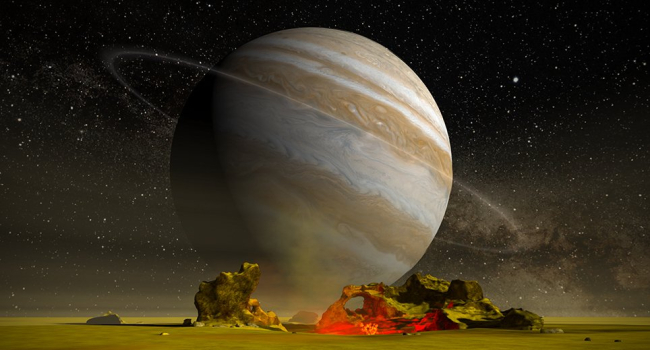
A new study by planetary scientists from Rice University shows that a significant portion of phosphorus and nitrogen — two of the most important elements for the emergence of life — arrived on Earth via asteroids that formed in the inner part of the Solar System. Jupiter played a huge role in this process.
How Earth received the "ingredients of life"
Phosphorus and nitrogen are critically important elements. Without nitrogen, amino acids are impossible; without phosphorus, DNA, RNA, and the ATP molecule — the main energy source in cells — cannot exist. Scientists have long tried to understand where these elements came from on the young Earth.
Researchers led by Rajdeep Dasgupta conducted laboratory experiments and computer modeling to reconstruct the distribution of these elements in the early Solar System.
The conclusion was unexpected: the proportions of phosphorus and nitrogen on modern Earth best match the composition of planetesimals (planetary building blocks) that formed in the inner part of the Solar System about 4.3–4.2 billion years ago — between Jupiter's orbit and the Sun.
Jupiter's role
Jupiter, which formed earlier than Earth, played a key role in the distribution of material. Before its appearance, matter in the protoplanetary disk mostly moved outward. After the giant planet's appearance, its gravity blocked this flow, retaining more material in the inner part of the system.
As a result, the second generation of planetesimals, which formed after Jupiter's "presence," had a higher phosphorus-to-nitrogen ratio. It was precisely these bodies that subsequently bombarded the young Earth, delivering life-essential elements to it.
Significance of the discovery
Rajdeep Dasgupta noted that for our Solar System, the presence and growth history of Jupiter truly played a critical role in determining the distribution of the major chemical ingredients necessary for habitable worlds.
The study shows that without such a "helper" as Jupiter, the distribution of vital elements could have been completely different. It also raises the question of how typical our Solar System is and how often the presence of a massive giant planet in the right place contributes to the emergence of conditions for life.
The work was published in the journal Science Advances.
In brief
Scientists have established that a significant portion of phosphorus and nitrogen on Earth was delivered by asteroids that formed in the inner part of the Solar System. Jupiter played a key role by blocking the outflow of material from this zone and influencing the chemical composition of planetesimals. Without such a gravitational "regulator," Earth could have received significantly fewer key elements for life. The research helps to better understand what conditions favor the emergence of habitable worlds in other star systems.