make preferable
An international group of researchers has found new evidence that the radioactive isotope plutonium-244, discovered in seafloor sediments, originated from a rare and powerful cosmic catastrophe that occurred more than 100 million years ago. The Earth, it appears, is still moving through a cloud of material left over from this event.
The work was published in the journal Nature Astronomy.
A rare isotope as a cosmic witness
Plutonium-244 is one of the heaviest natural elements in the Universe. It forms only under extreme conditions, when atomic nuclei rapidly capture a huge number of neutrons (the r-process). Its half-life is about 81 million years, so any plutonium that existed on Earth at the time of the Solar System's formation has long since decayed. Any modern findings of this isotope are considered traces of relatively "recent" events by cosmic standards.
What was found in the ocean
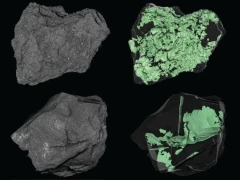
Scientists analyzed a sample of ferromanganese crust recovered from the Pacific Ocean floor from a depth of nearly 4.8 kilometers. Such deposits grow extremely slowly and accumulate information about the environment over millions of years.
Previously, the presence of plutonium-244 had been linked to a cosmic explosion that occurred about 3.5 million years ago. However, in the new study, scientists searched not only for plutonium but also for curium-247 — an element that should form alongside it in the r-process. Curium's half-life is significantly shorter — about 16 million years.
Curium-247 was not detected. Nor were traces of iron-60, which typically accompanies recent supernovae, found.
Conclusions of the researchers
The absence of accompanying isotopes suggests that the plutonium found is not associated with relatively recent stellar explosions. Rather, it likely formed in a much more ancient and rare event — probably a collision of two neutron stars or an exceptionally powerful supernova that occurred more than 100 million years ago.
The Earth is still passing through the remnants of this cosmic explosion, gradually collecting traces of the ancient catastrophe on its surface.
Significance of the discovery
The research helps to better understand the processes of heavy element synthesis in the Universe and shows that even hundreds of millions of years later, the consequences of powerful cosmic events can remain detectable on our planet.
In brief
Scientists have discovered plutonium-244 on the Pacific Ocean floor, which appears to have originated from a powerful cosmic event more than 100 million years ago. The absence of accompanying isotopes (curium-247 and iron-60) points to an ancient source — likely a neutron star collision. The Earth is still moving through a cloud of material left over from this catastrophe. The discovery helps to better understand the synthesis of heavy elements in the Universe.