make preferable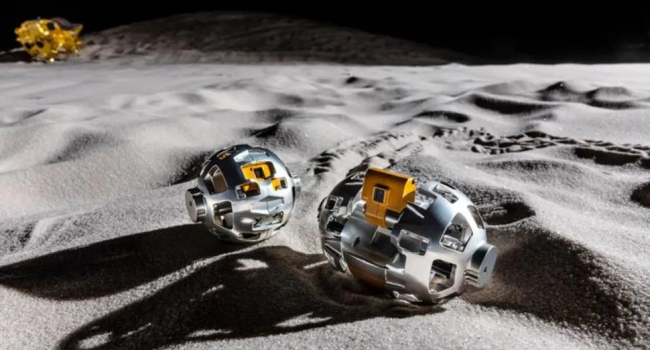
In January 2024, as part of the Japanese space agency JAXA's SLIM (Smart Lander for Investigating Moon) mission, a miniature robot called SORA-Q — the first transformable rover in history, measuring just 8 centimeters in size — was delivered to the lunar surface, according to Space.com.
How the Transformer robot works
SORA-Q was developed through a joint effort by JAXA, Sony Corporation, Doshisha University, and the famous toy manufacturer Takara-TOMY (co-creator of the Transformers brand). Initially, the robot had a spherical shape, which simplified transport and landing. On the lunar surface, it transformed: the two hemispheres became wheels, a camera rose up between them, and a stabilizing "tail" extended from the rear. After this transformation, SORA-Q could move independently and explore the terrain.
Mission objectives and results
The robot worked in tandem with another miniature device — the hopping LEV-1 (Lunar Excursion Vehicle-1). Together, they were intended to demonstrate the capabilities of small autonomous robots for studying hard-to-reach areas of the Moon — fissures, craters, and other zones that larger rovers cannot access.
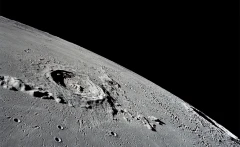
SORA-Q successfully took color photographs of the SLIM lander and the surrounding lunar surface in the area of Shioli Crater in the Mare Nectaris. The robots operated for about 100 minutes, after which communication was lost — likely due to damage to LEV-1 or its battery running out.
Why this is important
The mission showed that miniature transformable robots can be an effective and relatively inexpensive tool for lunar exploration. They are capable of working autonomously, navigating around obstacles, and transmitting data through other devices.
Development team leader Daichi Hirano noted that such small platforms have limited capabilities individually, but when working together, they open up new possibilities for studying the Moon.
In brief
Japanese scientists successfully tested a miniature Transformer robot called SORA-Q on the Moon. The 8 cm device transformed from a sphere into a mobile rover, took photographs, and worked in tandem with the hopping robot LEV-1. The mission proved the promise of using small autonomous robots for exploring hard-to-reach areas of the Moon. The results were published in the journal Science Robotics.