make preferable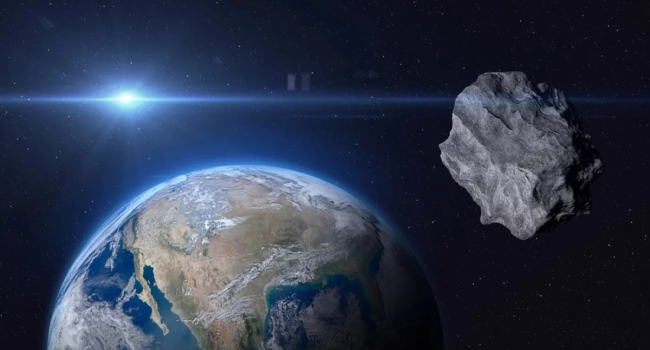
Scientists have identified a new meteor shower that most likely originated from a disintegrating asteroid regularly passing extremely close to the Sun. The discovery points to the existence of a special class of “rocky comet-like” objects that actively lose material under intense solar heating. The study was published in The Astrophysical Journal.
How the new meteor stream was discovered
The researcher analyzed millions of meteor records collected by automated observation cameras in Canada, Japan, California, and Europe. From this enormous dataset, it was possible to isolate a group of 282 meteors sharing a common origin.
The orbits of these particles indicate a parent body that approaches the Sun nearly five times closer than Earth does. At such distances, the asteroid’s surface experiences extreme heating, causing it to gradually break apart.
Asteroids behaving like comets
Scientists once believed that comets were “dirty snowballs” that shed material when approaching the Sun, while asteroids were thought to be relatively stable rocky bodies. In recent years, however, evidence has increasingly suggested that some asteroids can also become active.
One well-known example is asteroid 3200 Phaethon, the parent body of the famous Geminid meteor shower. It, too, loses material when exposed to intense heat near the Sun.
The newly discovered meteor stream appears to have a similar origin. The particles entering Earth’s atmosphere display intermediate properties: they are more fragile than typical asteroid fragments, yet stronger than ordinary cometary material. This suggests that intense solar heating may cause surface cracking, gas release, and gradual structural breakdown on the asteroid.
Why the discovery matters
The authors of the study note that this mechanism could help explain not only the behavior of Phaethon, but also the wide range of meteorite compositions found on Earth. Many meteorites may originate from similar “active” asteroids.
The parent asteroid of the newly identified stream has not yet been directly observed. It is likely small and very dark, making it difficult to detect from Earth. Scientists hope the future NASA mission NEO Surveyor, scheduled for launch in 2027, may help locate it. The space telescope is specifically designed to search for near-Earth objects traveling close to the Sun.
In brief
Scientists have identified a new meteor stream consisting of 282 meteors that likely originated from a disintegrating asteroid passing much closer to the Sun than Earth does. Under extreme heating, the asteroid appears to crack and shed material, behaving somewhere between an asteroid and a comet. The discovery, published in The Astrophysical Journal, strengthens the idea that some asteroids can become active and gradually fall apart. The parent body has not yet been found, but NASA’s NEO Surveyor mission may help identify it after its planned 2027 launch.