make preferable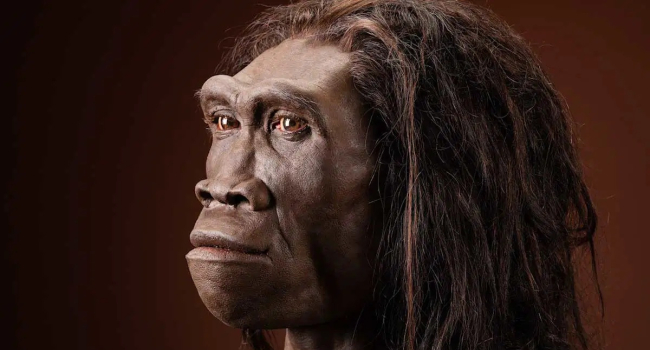
Human evolution appears to have been even more complex and interconnected than scientists once believed. An international team of researchers has uncovered direct genetic evidence suggesting that different species of ancient humans actively mixed with one another. The study was published in the journal Nature.
Proteins instead of DNA
The researchers analyzed six Homo erectus teeth dating back roughly 400,000 years, discovered at three archaeological sites in China. Because of the fossils’ great age, extracting usable DNA was no longer possible. However, tooth enamel preserves proteins remarkably well, and those proteins still contain traces of genetic information.
The enamel protein analysis produced an unexpected result. Scientists identified two rare variants of ameloblastin, a key protein involved in the formation of tooth enamel.
One of the variants had never previously been found in other ancient humans and appears to have been characteristic of East Asian Homo erectus populations.
The second variant turned out to be far more surprising: the exact same form had previously been identified only in Denisovans, the mysterious ancient humans known mainly from fragments of bones and teeth discovered in Denisova Cave.
Evidence of ancient interbreeding
The discovery represents one of the strongest pieces of evidence so far that Homo erectus and Denisovans came into contact and exchanged genes.
Researchers believe the genetic variant may have originated in East Asian Homo erectus populations before later being passed to Denisovans. Some of those genetic traits may eventually have made their way into modern humans as well.
A complex network rather than a straight line
For many years, human evolution was often portrayed as a relatively straightforward sequence in which one species replaced another. The new findings further reinforce a very different picture: one of a complicated network of interactions.
Several ancient human groups—including Homo erectus, Neanderthals, Denisovans, and early Homo sapiens—coexisted on Earth for long periods of time, migrating, encountering one another, and interbreeding.
Denisovans remain one of the greatest mysteries in paleoanthropology. Scientists still do not know whether they represented a single species or several closely related populations, how widely they spread across Asia, or exactly when they disappeared.
In brief
An international team of scientists analyzing enamel proteins from 400,000-year-old Homo erectus teeth discovered in China identified a genetic variant previously known only from Denisovans. The finding points to ancient interbreeding between the two groups. The study, published in Nature, adds to growing evidence that human evolution was not a simple linear process, but a complex web of interactions and genetic exchange between multiple ancient human populations.