make preferable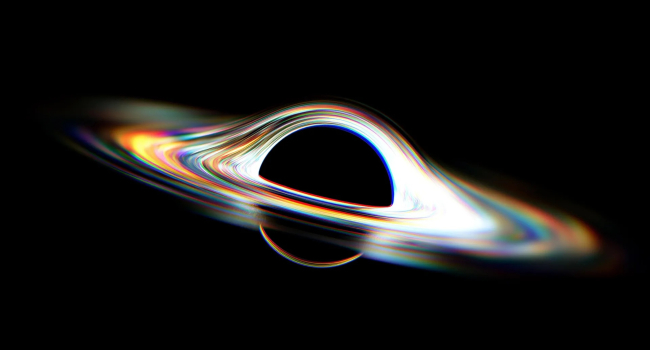
Astronomers may finally have an explanation for one of the strangest cosmic phenomena discovered in recent years: Luminous Fast Blue Optical Transients, or LFBOTs.
These extraordinarily bright blue flashes appear and fade within just a few days while remaining intensely hot throughout the event. Since 2018, scientists have observed only 14 confirmed LFBOTs, and their origin has remained one of modern astronomy’s biggest mysteries.
Now, a new study suggests they may be triggered when a compact object — either a black hole or a neutron star — collides with a Wolf–Rayet star, one of the hottest and most massive types of stars in the universe.
What Makes LFBOTs So Unusual
LFBOTs stand out sharply from other known cosmic explosions.
Unlike ordinary supernovae, which can remain bright for weeks or months, these events rapidly reach peak brightness and fade again within days. They also maintain an unusually blue color for most of their lifespan, indicating that the ejected material stays extremely hot.
Their combination of speed, brightness, and temperature has made them difficult to explain using traditional astrophysical models.
A New Collision Model
According to a study published on arXiv, LFBOTs may occur when a compact stellar remnant — a black hole or neutron star — merges with the helium core of a massive Wolf–Rayet star that has already lost its outer hydrogen layers.
Lead researcher Anya Nugent of the Center for Astrophysics | Harvard & Smithsonian said the model naturally explains both the flashes themselves and the environments in which they appear.
The proposed scenario also aligns well with observations showing that LFBOTs tend to occur in smaller galaxies with intense star formation activity and at noticeable distances from dense star clusters.
How the Explosion Happens
Researchers believe the process begins inside a binary star system.
One massive star gradually strips material from its companion, transforming it into a Wolf–Rayet star. The first star then explodes as a supernova, leaving behind either a black hole or neutron star.
Over hundreds or thousands of years, the compact remnant slowly spirals inward until it eventually collides with the Wolf–Rayet star’s core. The impact triggers a violent explosion and ejects enormous amounts of extremely hot material — producing the brilliant blue flash astronomers observe as an LFBOT.
The model may also explain why these events often appear in relatively isolated regions of galaxies. When the first star explodes, the entire binary system can receive a powerful “kick,” sending it far from its original birthplace.
Why Earlier Explanations Fell Short
Scientists previously explored several alternative theories, including conventional core-collapse supernovae and tidal disruption events involving massive black holes.
However, those models struggled to explain the unusually rapid evolution of LFBOTs, their persistent blue color, the dense surrounding material, and the characteristics of their host galaxies.
According to the new study, the Wolf–Rayet merger scenario matches the observed data far more closely.
What Comes Next
Because only 14 LFBOTs have been identified so far, astronomers say more observations are needed before the theory can be confirmed.
A major boost may come from the Vera C. Rubin Observatory and its decade-long LSST sky survey, which recently began operations.
Researchers expect the observatory to detect much fainter LFBOTs at far greater distances, dramatically increasing the known sample size and helping scientists understand how these rare events evolved across cosmic history.
In Brief
Astronomers now believe mysterious LFBOT blue flashes may occur when a black hole or neutron star crashes into a Wolf–Rayet star.
The model appears to explain the events’ extreme brightness, rapid evolution, hot temperatures, and unusual galactic environments better than previous theories. If confirmed, LFBOTs could become an important new window into the violent physics of binary star systems and some of the rarest high-energy events in the universe.