make preferable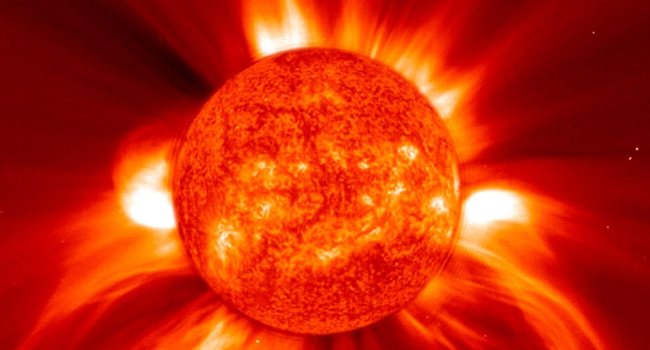
Researchers from the Solar Astronomy Laboratory of the Russian Academy of Sciences’ Space Research Institute (IKI RAS) believe the next powerful solar flare could occur on May 13.
Why Scientists Are Focusing on May 13
The forecast is based on a noticeable three-day pattern between recent solar eruptions. According to researchers, the same group of sunspots responsible for the flares on May 7 and May 10 appears to accumulate energy over roughly three-day cycles.
By May 13, the active solar region — currently moving from the edge of the Sun’s visible disk toward its center — is expected to reach a position where it can directly affect Earth.
The laboratory explained that once the region moves into this zone, any eruption becomes more likely to interact with Earth’s magnetic field.
What Has Already Happened This Week
Several significant solar events have already occurred in recent days:
- May 7–8: Earth experienced moderate geomagnetic storms linked to earlier solar activity.
- May 10: The Sun produced a powerful M5.7-class flare from active region 4436. M-class flares are considered very strong, second only to the most extreme X-class eruptions.
The repeated activity and behavior of this sunspot region have led scientists to believe another major flare is increasingly likely within days.
What Could Happen Next
If the forecast proves accurate, May 13 could bring another M-class flare or potentially even an X-class event.
Such eruptions may trigger fresh geomagnetic storms on Earth, increase the visibility of auroras at lower latitudes, and interfere with satellite communications, navigation systems, and power infrastructure.
In Brief
According to researchers at IKI RAS, the next major solar flare is expected around May 13. Their prediction is based on a recurring three-day energy buildup cycle observed in an active group of sunspots currently rotating into a more Earth-facing position.
Following the solar activity recorded on May 7 and the strong M5.7 flare on May 10, the Sun remains in an unusually active phase, making space weather conditions worth monitoring closely in the coming days.