make preferable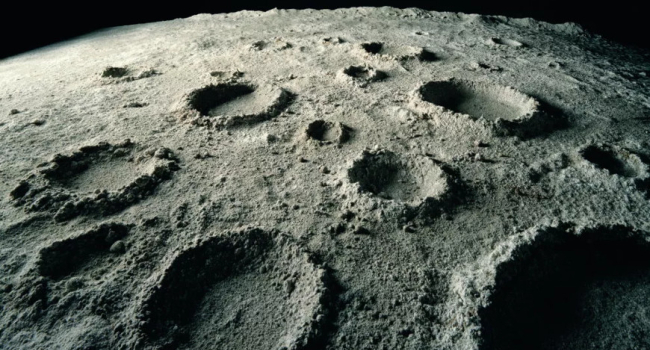
A new study has shown that water on the Moon did not appear as the result of a single major event but instead accumulated gradually over 3–3.5 billion years. The oldest craters near the Moon’s south pole—those that have remained in permanent shadow the longest—contain the greatest amounts of water ice. This is good news for future lunar missions and the creation of permanent bases, according to Space.com.
Gradual Accumulation Rather Than a Single “Impact”
Scientists have long debated the origin of lunar ice discovered in permanently shadowed craters near the south pole. Some researchers suggested that the water was delivered by a single large comet, while others believed it accumulated gradually.
An international team led by Paul Hayne of the Laboratory for Atmospheric and Space Physics at the University of Colorado Boulder, Oded Aharonson of the Weizmann Institute of Science, and Norbert Schörghofer of the Planetary Science Institute concluded that water accumulated gradually and almost continuously.
Paul Hayne noted that the oldest craters appear to contain the most ice, indicating that the process likely continued almost without interruption.
Why Ice Is Distributed Unevenly
A key factor was the gradual change in the Moon’s axial tilt over time. Because of this, some craters that were permanently shadowed three billion years ago are now partially illuminated by sunlight, while others have become permanently shaded.
Scientists used data from the Diviner thermal radiometer aboard the Lunar Reconnaissance Orbiter (LRO), along with computer modeling of the thermal evolution of craters. They compiled a list of craters that remained in shadow for the longest periods and compared it with data on ice distribution obtained by the LAMP instrument.
The result matched expectations: the longer a crater remained in cold shadow, the more ice it contained. For example, Haworth crater near the south pole, which has been in shadow for more than 3 billion years, shows some of the strongest radar signals indicating the presence of water.
Possible Sources of the Water
Researchers are considering several possible sources:
- Numerous impacts from small comets and asteroids;
- Ancient volcanic activity that may have released water from the Moon’s interior;
- Solar wind, in which hydrogen protons interacted with oxygen in lunar regolith to form water molecules.
Some water may even have migrated from Earth. Recent studies suggest that atoms and molecules from Earth’s atmosphere—including oxygen and water—have reached the Moon’s surface over billions of years.
Significance for Future Missions
The discovery has important practical implications. Water ice on the Moon could be used to produce drinking water, oxygen for breathing, and rocket fuel (hydrogen plus oxygen). The greater the concentration of ice in a single location and the more stable the “cold traps,” the easier it will be to establish future lunar bases.
Paul Hayne emphasized that a definitive answer about the origin of water on the Moon will only be possible through the analysis of samples collected directly from the lunar surface.
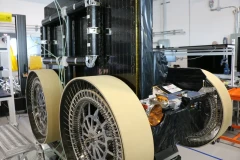
To support this goal, he is leading the development of the L-CIRiS (Lunar Compact Infrared Imaging System), a compact thermal camera designed to provide more detailed temperature data inside lunar craters. The instrument is scheduled to travel to the Moon in late 2027 as part of the Commercial Lunar Payload Services (CLPS) program aboard a lander from Intuitive Machines.
The study was published on April 7 in the journal Nature Astronomy.
In Brief
Water on the Moon accumulated gradually over 3–3.5 billion years rather than appearing after a single major event. The oldest craters near the south pole—those that remained in permanent shadow the longest—contain the greatest amounts of ice. This pattern is linked to the slow change in the Moon’s axial tilt and the migration of water into “cold traps.” The discovery simplifies planning for future lunar bases, where ice could be used for water, oxygen, and fuel. A complete understanding will require direct analysis of samples collected from the Moon’s surface. The study was published in Nature Astronomy.