make preferable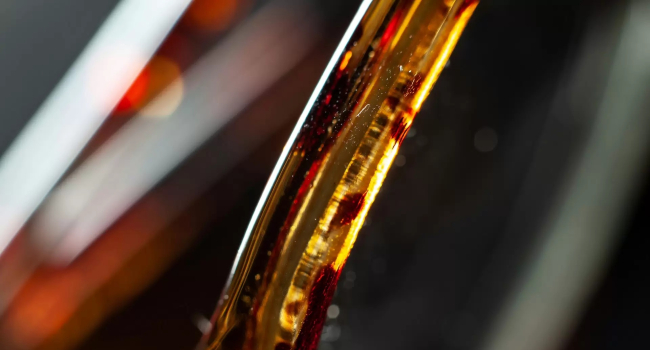
Liquids, which we normally think of as flowing and unable to hold their shape, can under certain conditions behave like brittle solids and literally tear apart with a sharp cracking sound. This unexpected conclusion was reached by a group of American physicists from Drexel University. The results of the study were published in the journal Physical Review Letters.
An Unexpected Experiment
The researchers initially set out to study the behavior of viscous liquids under stretching. They placed a sample between two plates and gradually increased the distance between them, recording the process with a high-speed camera. At a certain point, instead of stretching smoothly, the liquid suddenly tore apart with a loud snap, as if it were a piece of dry plastic or glass.
At first, the researchers suspected a malfunction in their equipment. However, a series of repeated experiments with different compositions confirmed that the phenomenon was real and reproducible. The effect was observed in hydrocarbon mixtures, styrene oligomers, and other viscous liquids.
The Mechanism Behind Liquid “Fracture”
The authors explained the phenomenon through Cavitation—the formation and rapid growth of microscopic cavities (bubbles) inside the liquid. When the tensile stress reaches a critical level, these cavities expand suddenly, causing the material to lose continuity.
The speed at which the rupture spread was found to be extremely high—between 500 and 1,500 meters per second. This is comparable to the speed of sound in some materials and explains the loud snapping sound heard during the experiments.
Why the Discovery Matters
Until now, it was generally believed that liquids could not undergo brittle fracture—they were expected to flow and deform instead. The new research shows that under certain conditions—such as high viscosity, rapid stretching, and restricted ability to flow—a liquid can behave like a brittle solid.
The scientists emphasized that such behavior may theoretically occur not only in extremely viscous substances but also in more familiar liquids, including water and oils, if the right loading conditions are created.
Practical Implications
The discovery is important not only for fundamental physics but also for several applied fields:
- 3D printing with liquid materials;
- Polymer processing;
- Soft robotics;
- Understanding processes in biological systems where liquids experience mechanical stress.
Researchers now aim to determine the limits of this phenomenon and establish how widespread it may be in nature and technology.
In Brief
Physicists from Drexel University discovered that viscous liquids can tear apart like brittle solids when stretched rapidly, producing a loud snapping sound. The phenomenon is linked to Cavitation, which involves the rapid formation and expansion of microscopic cavities inside the liquid. The rupture spreads at speeds of 500–1,500 meters per second. This finding shows that liquids can behave in unexpected ways under certain conditions and could influence the development of technologies such as 3D printing, polymer processing, and soft robotics. The study was published in Physical Review Letters.