make preferable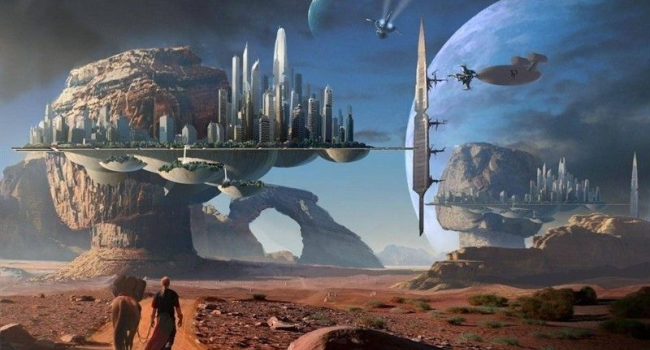
Cosmonautics Day has passed, but the question of humanity’s future beyond Earth continues to concern scientists. Vladislav Nikitin, Candidate of Physical and Mathematical Sciences and Associate Professor of the Department of Computational Mathematics, Mechanics, and Biomechanics at Perm Polytechnic University, explained what physiological and evolutionary changes may await humans during long-term residence on different planets of the Solar System.
Gravity as the Main Factor
One of the key conditions that will determine the appearance of future “Martians,” “Venusians,” or “Titanians” will be gravity.
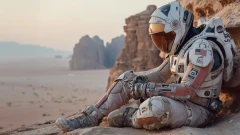
On Mars, where gravity is about three times weaker than on Earth, bone density in humans would gradually decrease, while height would increase. The heart would become smaller, and the blood would become “lighter,” because the body would no longer need to constantly overcome Earth’s familiar gravitational force.
Extreme Conditions of Other Worlds
Mercury, due to its extreme temperatures and high radiation levels, is unsuitable for life on the surface. The scientist believes that people would live in underground colonies. In conditions of constant twilight, vision would change, while hearing and touch would become significantly more sensitive. Psychologically, humans might adapt better to confined spaces.
On Venus, colonies would most likely be placed in the upper layers of the atmosphere, where conditions are relatively closer to those on Earth. Due to the lack of ultraviolet radiation, human skin would become noticeably lighter. To release heat more efficiently in the hot environment, limbs might lengthen, increasing the body’s surface area for heat dissipation.
Titan, Saturn’s moon, would greet colonists with extreme cold—temperatures there drop to minus 180 °C. Under such conditions, special antifreeze proteins could appear in the blood to prevent freezing. The layer of subcutaneous fat would also increase. Due to the very weak gravity, people on Titan might grow even taller than on Mars.
On the outskirts of the Solar System, for example on Pluto, life would be possible only in deep underground colonies. Vladislav Nikitin suggests that under such conditions humans might spend a significant portion of their time in a state close to hibernation in order to conserve energy and resources.
From Adaptation to Evolution
In the short term, changes would mainly be adaptive and physiological in nature and would not affect genetic code. However, with prolonged isolation of different groups of colonists, the situation could change.
Vladislav Nikitin concluded that after tens of thousands of years, accumulated mutations could lead to the emergence of new types of humans adapted to their respective planets.
He compared the process of adaptation to a chess game, explaining that nature changes environmental conditions while the human body responds by transforming its own structure.
In Brief
With long-term residence on other planets in the Solar System, the human body would gradually change under the influence of gravity, temperature, radiation, and other factors. On Mars, bone density would decrease and height would increase; on Venus, skin would become lighter and limbs would lengthen; on Titan, antifreeze proteins and a thick layer of fat would appear. On Mercury and Pluto, people would most likely live in underground colonies, where vision, hearing, and even activity patterns would change. In the short term, these changes would be physiological, but after tens of thousands of years true evolution could occur, leading to the emergence of new “types” of humans adapted to their planets, as explained by Associate Professor Vladislav Nikitin of Perm Polytechnic University.