make preferable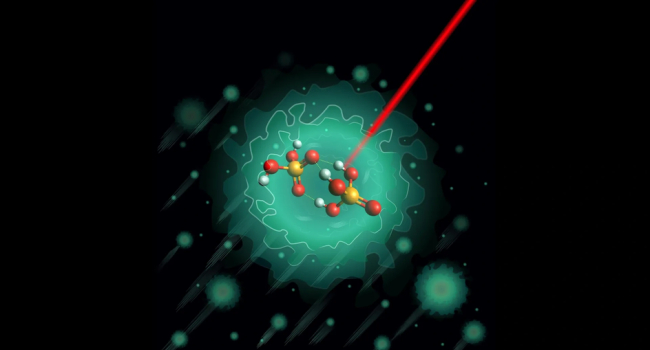
An international team of researchers has, for the first time, determined in detail how proton transfer occurs in phosphoric acid compounds — key molecules underlying the functioning of all living organisms. The results were published in the journal The Journal of Physical Chemistry A.
Why This Matters
Phosphoric acid and its derivatives are present in nearly all biological processes: they are components of DNA, RNA, cell membranes, and ATP — the cell’s main “energy currency.” Proton transfer through these compounds enables metabolism, energy generation, and signal transmission between cells. Scientists refer to this process as the “proton highway of nature.”
Until now, the mechanism of this transfer had not been fully understood at the molecular level.
How the Experiment Was Conducted
Researchers from the Fritz Haber Institute of the Max Planck Society, Leipzig University, and their American colleagues focused on a key structure — the negatively charged phosphoric acid dimer H₃PO₄·H₂PO₄⁻. This structure is believed to initiate the so-called “proton shuttle” — a process in which protons do not move freely but instead “hop” along chains of hydrogen bonds between molecules.
The experiment was carried out under extreme conditions: the molecule was cooled almost to absolute zero — to 0.37 Kelvin. At such temperatures, thermal vibrations nearly disappear, making it possible to study the structure of matter with high precision using infrared spectroscopy.
The experimental results were then compared with quantum-chemical calculations.
An Unexpected Result
Theoretical models had predicted the existence of two equally probable configurations of the dimer. However, the experiment revealed only one stable structure. This structure forms a rigid system of three hydrogen bonds linked by a shared oxygen atom. Within this arrangement, energy barriers regulate proton movement.
What This Means for Science and Technology
Understanding the precise mechanism of the “proton highway” opens new possibilities:
- For developing more efficient materials with high proton conductivity, such as proton-conducting membranes for fuel cells and next-generation batteries;
- For gaining deeper insight into bioenergetics in living cells;
- For creating artificial systems that mimic natural energy-transfer pathways.
In Brief
Scientists have experimentally confirmed how proton transfer occurs in phosphoric acid compounds — key molecules in living systems. The study showed that transfer occurs through a “proton shuttle” mechanism within a precisely defined dimer structure containing three hydrogen bonds. The experiment was conducted at an ultra-low temperature (0.37 K), eliminating thermal interference. The results may help develop more efficient fuel cells and improve understanding of fundamental cellular processes. The work was published in The Journal of Physical Chemistry A.