make preferable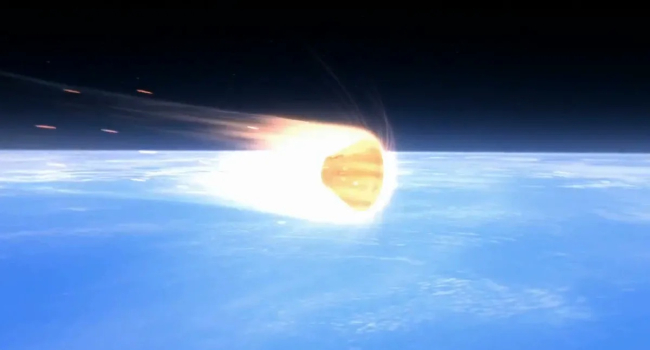
After successfully flying around the Moon, the crew of Artemis 2 — Reid Wiseman, Victor Glover, Christina Koch, and Jeremy Hansen — has begun the journey home. The most dangerous and critical phase of the mission awaits them on April 10, 2026: reentry into the atmosphere of Earth at enormous speed, followed by splashdown in the Pacific Ocean. Space.com reports.
The Most Risky Part of the Journey
During the final 160 kilometers (about 100 miles) of the descent, the Orion spacecraft will reach a speed of 38,367 km/h (23,840 mph). This is roughly equivalent to flying from New York City to Tokyo in less than 20 minutes. Instead, Orion will enter the atmosphere and is scheduled to splash down in the Pacific Ocean near San Diego on April 10 at 20:07 Eastern Time (05:07 local time, 00:07 GMT on April 11).
The entire descent process will last only eight dramatic minutes.
Why the Reentry Plan Was Changed
Originally, Orion was planned to perform a “skip reentry,” touching the upper layers of the atmosphere several times — like a flat stone skipping across water — gradually reducing speed.
However, after the uncrewed Artemis 1 in December 2022, this approach was abandoned. During that mission, the capsule’s heat shield suffered significant damage: gases expanding under extreme heating (up to 2,760 °C) tore chunks from the Avcoat material. This created a serious safety concern for future crews.
As a result, Artemis 2 will use a steeper reentry angle. This reduces the time the capsule spends in the zone of maximum heating and, engineers hope, will limit damage to the heat shield.
How the Heat Shield Works
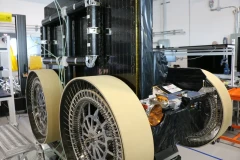
Orion’s heat shield consists of a titanium base covered with 186 blocks of Avcoat heat-resistant material, each 3.8 cm thick. This layer is designed to protect the astronauts from the extreme heat generated by friction with the atmosphere.
During reentry, the capsule will be surrounded by a plasma fireball, and communication with Earth will temporarily be lost — one of the most tense moments of the mission.
Final Descent by Parachutes
At an altitude of about 8 km, the capsule will still be traveling at approximately 523 km/h. Then the parachute deployment sequence will begin:
- First, three small pilot parachutes will deploy;
- Then, two drogue parachutes, each 7 meters in diameter;
- Finally, three large main parachutes, each 35.3 meters in diameter. Each of these parachutes weighs about 140 kg.
Together, they will slow the capsule to less than 32 km/h — a speed safe for splashdown.
What Happens After Splashdown
Immediately after splashdown, rescue teams from the United States Navy will deploy helicopters from the USS John P. Murtha (LPD-26). The crew will be extracted from the capsule, the hatch will be opened, and the module will remain afloat thanks to special inflatable flotation devices.
If everything proceeds as planned, the Artemis 2 astronauts will become the first people to return from lunar vicinity space in more than 53 years, paving the way for an actual lunar landing during Artemis 4 in 2028.
In Brief
On April 10, 2026, the Orion capsule carrying the Artemis 2 crew will enter Earth’s atmosphere at nearly 38,400 km/h. Because of heat shield damage observed during Artemis 1, engineers chose a steeper reentry angle to reduce risk. The eight-minute descent will include a plasma fireball and temporary communication blackout, followed by a multi-stage parachute deployment and splashdown in the Pacific Ocean near San Diego. A successful return will mark a major milestone on the path toward the Artemis 4 lunar landing planned for 2028.