make preferable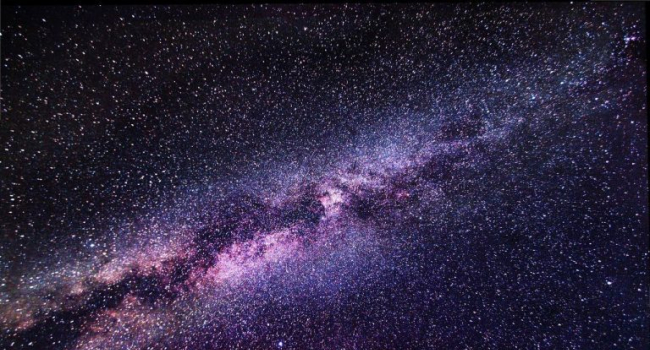
Astronomers have significantly expanded our understanding of the structure of the Milky Way. Using data from the Gaia mission operated by the European Space Agency, researchers identified 87 candidate stellar streams—thin, arc-shaped “ribbons” of stars that had previously gone unnoticed. The new study, published on March 23 in The Astrophysical Journal, increases the number of known objects of this type by more than four times.
What Are Stellar Streams?
Stellar streams form when dense globular clusters move through the Milky Way’s gravitational field and gradually lose stars. These stars stretch into long, curved ribbons that preserve a record of gravitational influences experienced over billions of years.
Co-author Oleg Gnedin from the University of Michigan compared the process to riding a bicycle with a bag of sand that has a hole in it, explaining that the grains of sand represent stars left behind along the path of motion.
These structures are extremely valuable to science because their shape and motion help map how mass is distributed throughout the galaxy—including the invisible halo of dark matter, often described as the “glue” that keeps galaxies from falling apart.
A New Algorithm Changed the Picture
Previously, astronomers knew of fewer than 20 stellar streams, most of which had been discovered by chance. Many of the known streams originated from dwarf galaxies or clusters that had already been almost completely destroyed. Streams from still-existing globular clusters were considered very rare.
Now the situation has changed. A research team led by Yingtian Chen from the University of Michigan developed a new algorithm called StarStream. Unlike earlier methods that relied mainly on visual pattern recognition, this algorithm uses a physics-based mathematical model built on theoretical predictions.
Oleg Gnedin explained that searching becomes much easier when researchers have a theoretical idea of what to look for and a simple phenomenological model to guide the process.
Applying the algorithm to Gaia data—collected between 2014 and 2025 and mapping the positions and motions of billions of stars—allowed researchers to identify 87 candidate stellar streams associated with globular clusters.
Unexpected Features of the New Streams
Many of the newly detected streams do not match the traditional image of thin, perfectly aligned ribbons. Some appear shorter, wider, or even offset from the orbits of their parent clusters. This likely explains why earlier searches, focused on the most obvious structures, overlooked them.
The data also suggest that some dispersed globular clusters are losing stars at unusually high rates, which may indicate that they are approaching complete tidal disruption.
Not all 87 candidates are guaranteed to be confirmed—some may turn out to be false detections caused by background star contamination. Nevertheless, even accounting for this possibility, the discovery greatly expands the available dataset and provides new material for understanding the evolution of the Milky Way and the distribution of dark matter.
What Comes Next
The results of the study and the StarStream algorithm can be readily adapted for future astronomical missions. In the coming years, new instruments are expected to help confirm the findings, including the Vera C. Rubin Observatory, the Nancy Grace Roman Space Telescope, and the Dark Energy Spectroscopic Instrument.
These tools will allow scientists to verify the newly detected streams and refine our understanding of the galaxy’s structure.
In Brief
Using the StarStream algorithm and data from the Gaia mission, astronomers identified 87 candidate stellar streams on the outskirts of the Milky Way—more than four times the number previously known. These thin stellar ribbons, formed by globular clusters shedding stars, preserve information about the galaxy’s gravitational field and the distribution of dark matter.
Many of the streams have unexpected shapes—shorter, wider, or offset—which explains why they had not been detected earlier. The discovery provides a powerful new tool for studying the evolution of our galaxy and will be actively tested using next-generation telescopes.