make preferable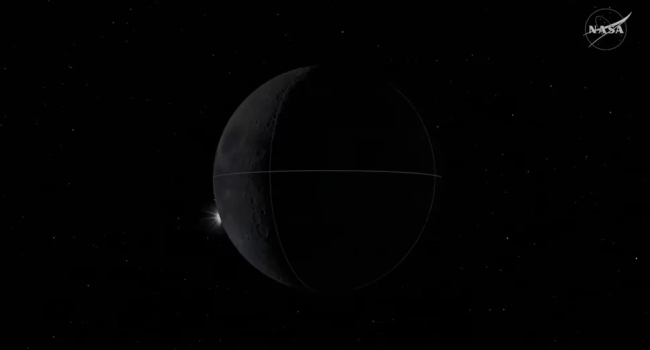
On Monday evening, April 6, 2026, the crew of Artemis II will witness a unique astronomical event that cannot be seen from Earth. During their flyby of the far side of the Moon, astronauts aboard the Orion spacecraft will observe a total solar eclipse lasting about 53 minutes—roughly seven times longer than the longest eclipse visible from Earth.
A Unique Eclipse Geometry
From Earth, the Moon and the Sun appear roughly the same size in the sky. However, from Orion’s vantage point—farther from Earth than any humans have traveled in decades—the Moon will appear significantly larger.
During a press conference on April 4, Kelsey Young explained that from Earth, the Moon and Sun look similar in size, but from Orion’s perspective, the Moon will appear much larger than it does to observers on the ground.
Because of this geometry, the Sun will be completely hidden behind the Moon’s disk for approximately 53 minutes. The eclipse is expected to begin around 8:35 p.m. Eastern Time (00:35 GMT on April 7), about an hour and a half after Orion reaches its maximum distance from Earth—406,773 kilometers. This distance is about 6,400 kilometers farther than the record set by the crew of Apollo 13 in 1970.
Scientific Value of the Observations
The eclipse will provide a rare opportunity to study the Sun’s outer atmosphere—the corona—which is usually hidden by the Sun’s intense brightness. NASA has prepared specific observation tasks for the astronauts.
Kelsey Young noted that the crew had been given prompts to describe features they observe in the solar corona, explaining that these observations would help solar scientists better understand coronal processes, especially given the crew’s unique viewing position compared with spacecraft in orbit and observers on Earth.
In addition, astronauts will conduct detailed visual observations of the Moon itself. The human eye can detect subtle color variations and visual nuances that are sometimes missed by automated probes. A similar observation occurred during the Apollo 17 mission, when astronauts noticed unusual orange-colored regolith that later revealed that volcanic activity on the Moon had lasted longer than previously believed.
Young added that the crew had been instructed to allow their eyes time to adjust during the flyby and to report any subtle color variations, especially on regions of the far side that have never before been seen directly by human eyes.
Not the First, but Still Special
Astronauts from the Apollo era also observed solar eclipses while orbiting the Moon. However, this event will be particularly meaningful for Artemis II because the mission was originally planned for early February, and shifting into the April launch window unexpectedly made the eclipse visible.
In an interview with Canadian media, Jeremy Hansen admitted that witnessing such an event had not originally been expected. He added that since the launch took place on April 1—the anniversary of the Royal Canadian Air Force—the opportunity to see the eclipse felt like a remarkable bonus.
In Brief
On April 6, 2026, during a flyby of the Moon’s far side, the Artemis II crew will witness a total solar eclipse lasting about 53 minutes—an event impossible to observe from Earth. Because of their great distance, the Moon will appear much larger than the Sun from their viewpoint. The crew will carry out scientific observations of the solar corona and carefully study the lunar surface, particularly areas of the far side never before seen directly by humans. This rare astronomical event became an unexpected highlight of the mission, which was originally planned for February. After completing the flyby, Orion will head back toward Earth, with splashdown scheduled for April 10 off the coast of San Diego.