make preferable
Scientists have obtained another significant piece of evidence suggesting that ancient Mars may once have been habitable. The Perseverance rover has detected unusually high concentrations of nickel in rocks within Jezero Crater—an element that, on Earth, plays an important role in the metabolism of microorganisms.
Record Nickel Levels in an Ancient Riverbed
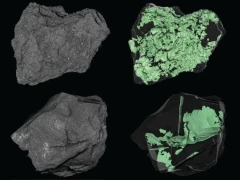
The discovery was made in a light-toned rock formation known as Bright Angel, located in the ancient river channel Neretva Vallis, which once flowed into Jezero Crater. Instruments aboard the rover recorded an exceptionally strong nickel signal in this rock.
Planetary scientist Henry Manelski of Purdue University explained that such concentrations are extremely rare on planetary surfaces. Nickel typically sinks into a planet’s core during early formation, leaving only trace amounts in the crust.
Out of 126 sedimentary rock samples studied, 32 contained nickel levels reaching up to 1.1% by mass—record values for the Martian crust outside of meteorite inclusions.
Reducing Environment and Iron Sulfides
What makes the finding particularly intriguing is not just the amount of nickel, but its association with iron sulfides—minerals that on Earth form in oxygen-poor (reducing) environments. Such conditions are considered highly favorable for the emergence and development of early microbial life.
Henry Manelski noted that the presence of nickel within iron sulfides points to a reducing, low-oxygen environment and provides an important clue about the chemical conditions under which these rocks formed.
The structure of the rocks also suggests they were shaped by active water processes. Fluids once flowed through the sediments, triggering chemical reactions and redistributing elements, including nickel.
The Origin of Nickel and Why It Matters
Scientists believe the nickel may have been delivered to Mars by meteorites and later dissolved and distributed through ancient water flows. On Earth, this element is critical for many microbial metabolic processes. Its high concentration, combined with the presence of water, creates what can be described as chemically favorable conditions for life.
Another important factor is the detection of organic compounds—carbon-containing molecules. While their presence alone does not prove life existed, when combined with liquid water and biologically useful elements like nickel, they form a complete set of basic ingredients necessary for life to emerge.
Rock Age and New Perspectives
The rocks in Jezero Crater are estimated to be around 3.5 to 4 billion years old—a time when anaerobic microorganisms already existed on Earth. However, some samples may be younger than previously thought. This suggests that habitable conditions on Mars could have persisted much longer than assumed, extending beyond the planet’s earliest history.
The discovery is prompting scientists to rethink their strategy for searching for signs of life on Mars. Not only the oldest geological layers, but also relatively younger formations are now considered promising targets—especially those that may have preserved evidence of long-lasting liquid water and favorable chemical environments.
In Brief
The Perseverance rover has found record-high nickel concentrations—up to 1.1% by mass—in an ancient riverbed within Neretva Vallis in Jezero Crater. Nickel, combined with iron sulfides and traces of organic compounds, points to a reducing, low-oxygen environment where liquid water once existed. On Earth, such conditions are considered favorable for microbial life. This discovery broadens the timeframe of Mars’ potential habitability and reshapes ideas about where to search for signs of ancient life on the Red Planet. The study was published in Nature Communications.