make preferable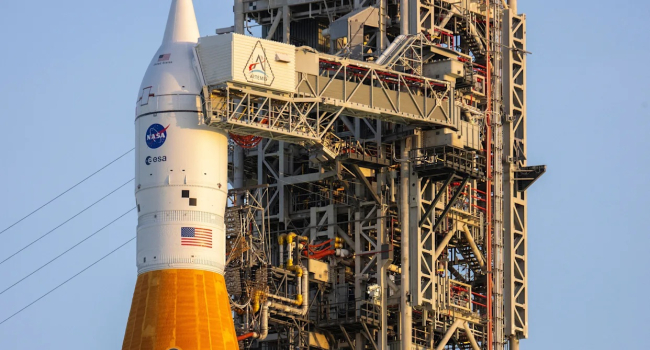
The Artemis 2 mission, which launched on April 1, 2026, from Kennedy Space Center in Florida, is not only a technical test of the Orion spacecraft and the SLS rocket in a crewed configuration. It is a full-fledged scientific expedition in which the astronauts themselves become the primary subjects of study. For the first time in more than half a century, humans have ventured beyond low Earth orbit, giving scientists a unique opportunity to examine the effects of deep space on the human body under real conditions.
The ten-day flight along a free-return trajectory will allow the crew—Reid Wiseman (commander), Victor Glover (pilot), Christina Koch, and Jeremy Hansen—to travel about 4,700 miles (7,560 km) beyond the far side of the Moon. This is farther than the Apollo 8 astronauts flew. While Orion carries out its primary task—testing life-support, navigation, and control systems in deep space—biological, medical, and geological experiments will be conducted simultaneously on board.
AVATAR: “Virtual Astronauts” from Bone Marrow
One of the most intriguing experiments is AVATAR (A Virtual Astronaut Tissue Analog Response). It uses organ-on-a-chip technology—miniature tissue models about the size of a flash drive, grown from the astronauts’ own cells. These cells were taken from donor blood before the flight and transformed into bone marrow analogs.
Bone marrow is responsible for producing blood and immune cells and is highly sensitive to radiation. During the mission, the chips will be exposed to microgravity and increased cosmic radiation. After the crew returns, scientists will analyze molecular-level changes—how thousands of genes responded.
The data will be compared with results from experiments on the International Space Station (where Earth’s magnetic field partially shields the crew), as well as with biological samples from the astronauts taken before and after the flight. This will help determine whether such “organ chips” can be used for personalized risk prediction in future long-duration missions, including those to Mars. Previous station research has already shown bone mass loss even during relatively short missions; in deep space, the risks will be significantly greater.
ARCHeR and the Immune System: Stress, Sleep, and Teamwork
The ARCHeR experiment (Artemis Research for Crew Health and Readiness) will study how astronauts cope with life inside Orion’s confined living space, which is comparable in size to a small studio apartment. The crew will wear special wristbands that record stress levels, movement, sleep quality, and cognitive performance in real time.
Scientists aim to understand how daily routines, limited space, isolation, and distance from Earth affect health, performance, and team interaction.
Particular attention is being paid to the immune system. The astronauts will collect saliva samples by applying them to special paper (there is no refrigerator on board, so the method is deliberately simple). These “dry” samples, along with blood tests, will allow researchers to track changes in immune markers under the influence of radiation, stress, and isolation.
Researchers will also examine whether dormant viruses—such as those that cause chickenpox or shingles—reactivate during the mission. Similar reactivations have already been observed on the ISS. Health monitoring will begin months before launch and continue long after splashdown: astronauts will undergo tests of balance, coordination, and even simulated tasks in spacesuits.
Measuring Radiation Beyond the Magnetosphere
Unlike the ISS, Artemis 2 travels beyond the protective “bubble” of Earth’s magnetic field. Radiation levels are significantly higher there. Each crew member carries a personal dosimeter in a pocket, while six additional stationary sensors are installed inside the module. These measure radiation dose in real time and can warn of sudden spikes, such as during solar storms.
Additional data will come from several small CubeSats provided by international partners. Together, these measurements will help scientists better understand how radiation is distributed inside Orion and how it affects both the human body and tissue models.
A Rare View of the Far Side of the Moon
The mission’s scientific scope is not limited to biology. When Orion passes behind the Moon, the crew will have a roughly three-hour observation window. Drawing on their geological training, the astronauts will photograph and describe a surface that humans have not closely observed for more than 50 years.
From that distance, the Moon will appear roughly the size of a basketball held at arm’s length. Of particular interest is the Orientale Basin—a massive impact crater about 3.8 billion years old and approximately 960 km in diameter. It lies on the boundary between the near and far sides and remained inaccessible for direct observation during the Apollo era.
The astronauts may also detect flashes from meteoroid impacts or faint clouds of lunar dust near the horizon—phenomena that are still poorly understood. These observations will help refine plans for future Artemis landings, especially in the Moon’s south polar region: where best to land, which samples to collect, and which areas hold the greatest scientific value.
In Brief
Artemis 2 is both a test mission and a deeply scientific one. Scientists hope to obtain new data on how deep space affects the immune system, bone marrow, and overall human health through AVATAR organ-on-a-chip experiments, stress and sleep monitoring in ARCHeR, and detailed radiation measurements. At the same time, the crew will conduct rare visual observations of the Moon’s far side, helping to plan future landings. All of this represents a crucial step toward understanding the risks of long-duration spaceflight and preparing not only for a return to the Moon, but also for future missions to Mars. The mission’s results will form the foundation for safer and more effective space exploration in the next generation.