make preferable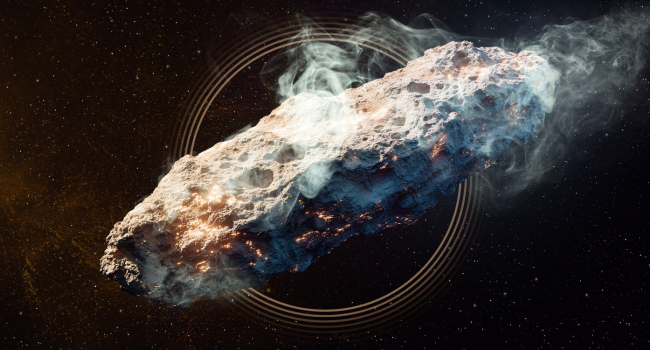
The interstellar comet 3I/ATLAS, which became a major sensation in 2025, has turned out to be significantly older than previously thought. A new study of its isotopic composition has shown that the “visitor” may be between 10 and 12 billion years old. This means the comet formed just a few billion years after the Milky Way itself.
This is already the third confirmed interstellar object to visit the Solar System, following 1I/‘Oumuamua and 2I/Borisov.
Speed and “Kinematic” Age
At the time of its discovery, the comet was moving relative to the Sun at a speed of 58 km/s — the fastest cometary object ever observed. According to theory, the higher the speed of an interstellar object, the older it is: reaching such velocities would require numerous gravitational interactions and close encounters with other stars over billions of years.
Astronomers Aster Taylor and Darryl Seligman of the University of Michigan and Michigan State University initially estimated the comet’s “kinematic” age to be between 3 and 11 billion years. A new study led by Martin Cordiner of NASA’s Goddard Space Flight Center shifted the estimate toward the upper end of that range.
Isotopic Analysis Using the James Webb Telescope
Using the Near-Infrared Spectrograph (NIRSpec) aboard the James Webb Space Telescope, scientists measured two key parameters:
The ratio of carbon isotopes ¹²C/¹³C in molecules such as CO, CO₂, methanol, formaldehyde, and methane.
The level of deuterium enrichment in water (the D/H ratio).
The results proved remarkable: 3I/ATLAS contains significantly less ¹³C than any known objects in the Solar System, circumstellar disks, or local molecular clouds. Since ¹³C gradually accumulates in the interstellar medium over time (primarily due to nova outbursts in binary systems with white dwarfs), its low abundance indicates that the comet formed very early — before the galaxy accumulated its present-day levels of ¹³C.
Models of Milky Way evolution suggest that such a chemical composition is characteristic of a period roughly 10–12 billion years ago.
The high level of deuterium enrichment in water also supports an early origin: such enrichment occurs at very low temperatures (around 30 K) in environments poor in heavy elements, typical of the early stages of galactic history.
What This Means for Early Planetary Systems
Comets form beyond the “snow line” — the boundary in a protoplanetary disk where water exists as ice. Therefore, the composition of 3I/ATLAS reflects the building material of planets formed beyond this boundary.
Martin Cordiner noted that cometary materials generally represent the building blocks of planets beyond the snow line, and that interstellar comets provide a unique opportunity to glimpse what extrasolar planets were made of in very early epochs.
The comet 3I/ATLAS is rich in carbon and water, and shows complex organic chemistry on the surface of its icy dust grains. This suggests that even in one of the earliest eras of planet formation in the galaxy, water and organic molecules already played an important role.
Where Did It Come From?
The exact birthplace of 3I/ATLAS is unlikely to be determined — over billions of years, gravitational interactions with stars have significantly altered its trajectory. However, the comet’s age allows for a plausible hypothesis: it likely originated in the Milky Way’s thick disk, which began forming about 13 billion years ago. The thin disk, where our Sun resides, is significantly younger — about 9 billion years old.
Moreover, the comet is so ancient that the star system in which it formed may no longer exist.
In Brief
The interstellar comet 3I/ATLAS may be 10–12 billion years old, having formed shortly after the birth of the Milky Way. Isotopic analysis (low ¹³C content and high deuterium enrichment in water), conducted using the James Webb Space Telescope, confirms its extremely ancient origin. This makes 3I/ATLAS a possible relic of one of the earliest planetary systems in the galaxy. Its parent star likely no longer exists. The study is currently available as a preprint and is awaiting peer review.