make preferable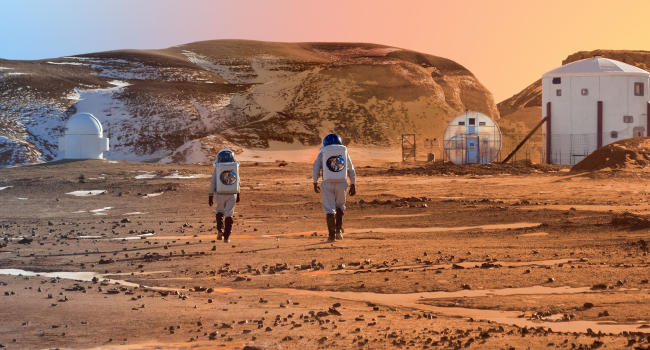
Reduced gravity on Mars (only about 38% of Earth’s) could become a serious challenge for the bodies of future colonists. A new study has shown that even this relatively “mild” gravity still leads to noticeable loss of muscle mass and strength, although not as catastrophic as in complete weightlessness.
This was reported by the portal Universe Today, citing a study by an international team of scientists.
Experiment on the ISS
To understand how the body responds to different levels of gravity, researchers sent 24 mice to the International Space Station. The animals were housed in the Japanese Kibo module, where artificial gravity of varying strength — from complete weightlessness to Earth-level (1 g) — was created using a centrifuge. The experiment lasted 28 days.
The study’s lead researcher, Professor Marie Mortre of the University of Rhode Island, explained that several gravity levels were used to determine how the body responds to changes in gravity, and that the 0.33 g level turned out to be very close to Martian gravity.
What the Results Showed
An analysis of skeletal muscle condition (which accounts for more than 40% of human body mass) revealed a clear picture:
At 0.33 g (approximately Martian gravity), muscle loss was significantly less than in weightlessness, but still noticeable.
At 0.67 g, muscle atrophy was almost completely prevented.
Grip strength measurements confirmed that gravity around 0.67 g helps preserve normal muscle function.
In addition, scientists identified 11 metabolites in the blood whose concentrations changed depending on the gravity level. These substances may serve as useful biomarkers for monitoring astronauts’ condition during long-duration space missions.
What This Means for Missions to Mars
The findings point to an important threshold: to significantly slow or prevent muscle atrophy, gravity of no less than about 0.67 g is required. Martian gravity (0.38 g) is well below this level. This means that even on the surface of the Red Planet, astronauts will need additional protective measures — regular resistance exercise, specialized training equipment, and possibly pharmacological support.
The transit period to Mars, which may take 6–9 months in near weightlessness, remains especially critical. That is why researchers emphasize the need to create artificial gravity aboard interplanetary spacecraft, for example by using rotating modules.
In Brief
An international team of scientists conducted an experiment on the ISS and found that Martian gravity (0.38 g) only partially protects muscles from atrophy compared to weightlessness. Full protection of muscle tissue occurs only at around 0.67 g. The study also identified 11 metabolites that could serve as biomarkers for monitoring astronaut health. Future missions to Mars will require a combination of physical exercise and, likely, artificial gravity aboard spacecraft to preserve crew muscle mass and strength. The study was reported by Universe Today.