make preferable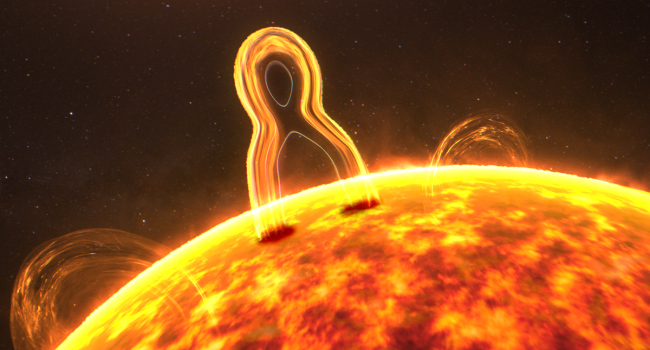
On the morning of March 30, a powerful top-tier X-class flare was recorded on the Sun. This is the first event of this magnitude since early February 2026, according to the Institute of Applied Geophysics.
The X1.5-class flare occurred at 06:19 Moscow time in active region 4405 (coordinates S25E45). It lasted 49 minutes and was detected in the X-ray range.
Context of Solar Activity
The previous X-class flare was observed on February 4, reaching X4.2 in active region 4366. That region later set a 21st-century record for the total number of M- and X-class flares.
Sergey Bogachev, head of the solar astronomy laboratory at the Space Research Institute of the Russian Academy of Sciences, previously noted that 5 to 10 more X-class flares could be expected by the end of 2026. Solar activity remains elevated, which is typical for the current cycle.
What X-Class Flares Are
Solar flares are classified by their X-ray intensity into five categories: A, B, C, M, and X. Each successive category is ten times more powerful than the previous one. X-class flares are the strongest and are often accompanied by coronal mass ejections—large clouds of plasma. If such a cloud reaches Earth, it can trigger geomagnetic storms and disrupt satellites, radio communications, and power systems.
In Brief
On March 30 at 06:19 Moscow time, an X1.5-class flare occurred on the Sun in sunspot group 4405, lasting 49 minutes. This is the first X-class flare since early February. Such events can be accompanied by plasma ejections that affect space weather near Earth. Experts expect several more flares of this magnitude before the end of the year, according to the Institute of Applied Geophysics.