make preferable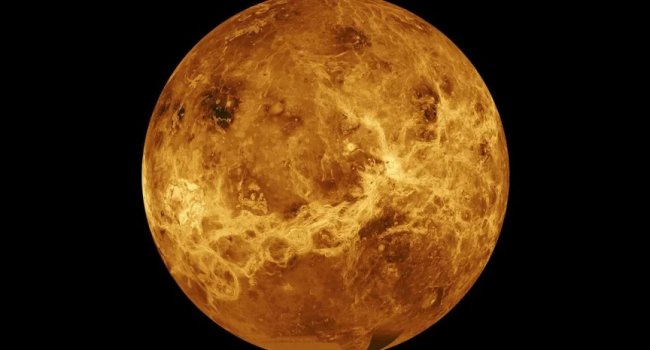
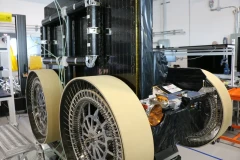
Atmospheric entry is one of the most dangerous stages of any space mission. A spacecraft accelerates to hypersonic speeds and experiences extreme heating due to friction with gas molecules. That is why landers and rovers are equipped with heat shields that gradually “burn away,” protecting the payload.
A new study by researchers from the Grainger College of Engineering at the University of Illinois Urbana-Champaign shows that atmospheric composition strongly affects how thermal protection systems behave. The results were published on February 5 in Carbon.
Experiments in a Plasma Wind Tunnel
To simulate hypersonic entry conditions, a team led by Francesco Panerai conducted a series of tests using the Plasmatron X facility—one of the most powerful plasma wind tunnels in the world, located at the university.
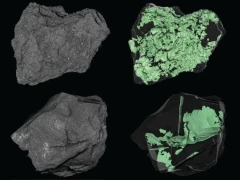
The researchers simulated interactions between heat shield materials and different gas compositions. The key finding turned out to be surprising even for experts.
Panerai explained that when the gas composition was changed, the ablation process behaved completely differently.
In a typical Earth-like atmosphere, where oxygen is present, ablation proceeds in a steady and predictable way: the gas flow gradually erodes the surface, and particles are carried away in a continuous stream.
However, in the absence of oxygen, the picture changes dramatically.
Panerai noted that without oxygen, the process becomes unstable, with intermittent bursts of particle ejection and, at times, highly turbulent and aggressive ablation behavior. He added that despite more than 15 years of studying ablation, he had never observed anything like this before, and the team was surprised when they first saw it in the facility.
Why This Matters for Future Missions
Understanding how atmospheric chemistry affects heat shields is critical for spacecraft design. In the coming years, NASA plans to send the Dragonfly mission to Titan, the largest moon of Saturn. The launch is scheduled for 2028.
Titan’s atmosphere is very different from Earth’s: it consists of about 95% nitrogen and 5% methane, whereas Earth’s atmosphere contains about 78% nitrogen and 21% oxygen. This means that the behavior of heat shields during entry into Titan’s atmosphere could differ significantly from the familiar Earth scenario. By contrast, planets like Venus, which have oxygen-related chemistry in their upper atmosphere, may produce more predictable ablation patterns.
Dragonfly is designed to explore Titan’s surface, including its hydrocarbon lakes and rivers, and to search for molecules that could be precursors to life.
Panerai emphasized that while the study does not directly change heat shield designs, it has deep implications for understanding material physics at extreme temperatures. He added that knowing under which conditions this unstable regime appears will help engineers develop more reliable thermal protection systems.
In Brief
Researchers from the University of Illinois Urbana-Champaign found in experiments with the Plasmatron X plasma facility that atmospheric composition strongly affects heat shield behavior during hypersonic entry. In oxygen-rich environments (like Earth and Venus), ablation is steady and predictable, while in nitrogen- and methane-rich atmospheres (like Titan), it becomes unstable and can involve sudden particle bursts. These findings are important for the upcoming Dragonfly mission and will help improve models of material behavior in different planetary atmospheres. The study was published in Carbon.